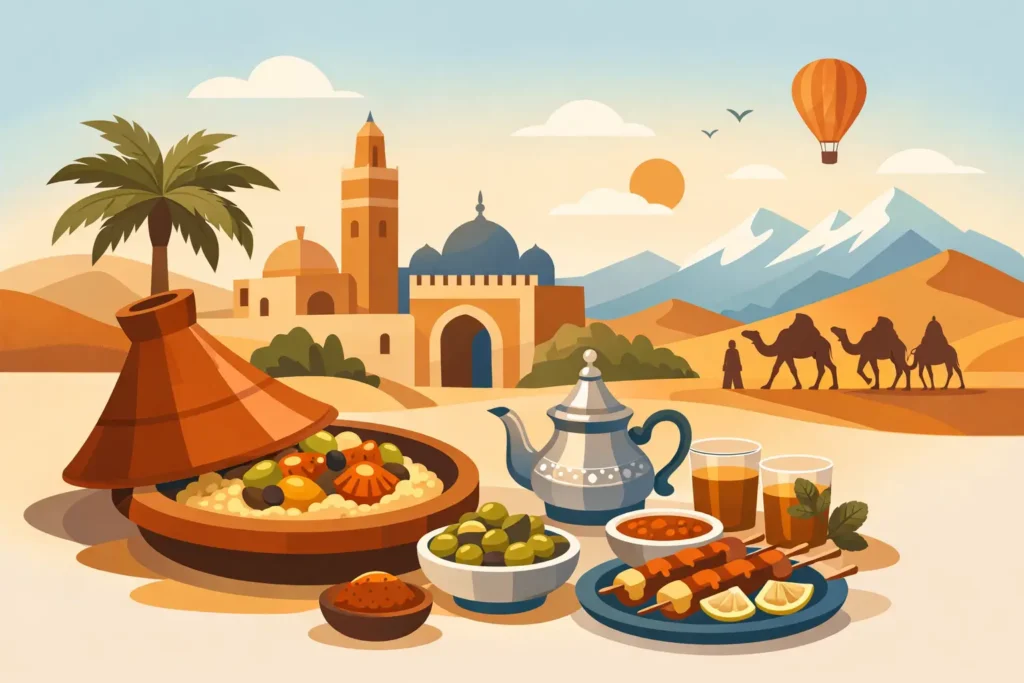
A memorable Moroccan meal is rarely just about what is on the plate. It begins with the scent of cumin at a market stall, continues with a conversation over mint tea, and often ends around a shared table long after the sun has set. To create Moroccan culinary itinerary plans that feel genuine, build your route around regional food traditions rather than trying to fit every famous dish into a few hurried days.
Morocco is a country of distinct culinary regions. Marrakech brings lively market food and refined riad dining; Fes rewards travellers with family recipes and centuries-old food crafts; the Atlas Mountains offer seasonal, ingredient-led cooking; and the Sahara delivers simple, generous meals shaped by desert life. A private journey gives you the freedom to enjoy these experiences at the right pace, with a local guide who knows which stops are worth your time.
Start with the right length and route
For a food-focused holiday, seven to ten days is a comfortable starting point. A shorter stay can still work well, but it is best to choose two or three regions rather than attempting a full circuit. Long drives are part of travelling through Morocco, especially when the Sahara is included, so the best itinerary balances tasting experiences with time to rest and enjoy each destination.
A strong first itinerary for most visitors starts in Marrakech, crosses the High Atlas Mountains towards Ait Ben Haddou and Ouarzazate, continues to Merzouga for the desert, then travels north through the Ziz Valley to Fes. From Fes, you may add Chefchaouen and Tangier, or return to Casablanca depending on your flight plans.
This route works particularly well because the food changes naturally along the way. You move from Marrakech’s busy souks to Berber village kitchens, date-growing valleys, desert hospitality and the deep culinary heritage of Fes. If you prefer less road time, a Marrakech and Atlas Mountains itinerary offers excellent food experiences without the longer journey east.
Build your Morocco culinary itinerary around regional flavours
Marrakech: market energy and modern Moroccan cooking
Plan at least two nights in Marrakech. Begin with a guided walk through the medina’s food markets, where your guide can explain spices, olives, preserved lemons, dried fruit and the varieties of bread sold throughout the day. This is more valuable than wandering alone with a shopping list, as quality and price can vary from one stall to another.
Marrakech is an excellent place for a cooking class, especially early in your holiday. You can shop for ingredients, prepare a tagine or couscous meal, and learn why Moroccan cooking depends so much on timing, balance and fresh produce. A good class should be hands-on, not simply a demonstration followed by lunch.
Leave room for a relaxed dinner in a traditional riad as well. Street food in Jemaa el-Fna can be fun and atmospheric, but it is not the only food experience Marrakech offers. For many travellers, the best balance is one carefully chosen market-food evening and one quieter dinner where the dishes can be enjoyed without the crowds.
The High Atlas: Berber hospitality and seasonal cooking
The journey from Marrakech across the High Atlas is not only a scenic transfer. It is an opportunity to understand how geography shapes Moroccan food. In mountain villages, meals often centre on vegetables from small plots, olive oil, fresh bread, local honey, walnuts and slow-cooked tagines prepared over charcoal or gas.
A lunch in a family home or a carefully selected village guesthouse can become one of the most personal moments of the trip. Expectations matter here: this is not restaurant-style fine dining. The value lies in warm hospitality, simple ingredients and the chance to see everyday cooking traditions in context.
If your holiday falls during cooler months, mountain dishes feel especially satisfying. In summer, ask for lighter lunches and make sure the day is paced sensibly. The Atlas roads are beautiful, but they can be winding, and a private driver allows useful stops without turning the journey into a race.
Ouarzazate and the south: dates, almonds and saffron
South of the mountains, the food becomes closely connected to oasis agriculture. Dates are central to daily life in the Draa and Ziz valleys, while almonds, figs and pomegranates appear in season. Depending on your route and travel dates, you may also include the Taliouine area, Morocco’s leading saffron-growing region.
This is a good place to try dishes that feel more rural and less familiar than the standard restaurant menu. Ask your guide about madfouna, sometimes called Berber pizza, a filled bread traditionally associated with the south-east. It is hearty, portable and ideal after a day on the road.
Merzouga: desert dinners with meaning
A night in the Sahara should not be judged only by the camel ride or the camp photographs. Dinner around Merzouga is part of the experience, particularly when it is prepared with local ingredients and served after sunset beneath clear desert skies. Expect tagines, salads, bread and tea, often followed by music around the fire.
Desert camps vary widely. Luxury camps generally provide greater comfort, private tents and more polished service, while simpler camps offer a more basic adventure. Neither is automatically better. Couples and families often appreciate a higher-comfort camp, while travellers seeking a more traditional overnight may prefer a smaller, quieter setup.
If you have an extra day in Merzouga, visit a local family or village rather than spending all your time at the dunes. This creates space for a home-cooked lunch and a fuller picture of the communities that live around the Sahara.
Fes: the essential stop for serious food lovers
Fes deserves at least two nights, and three is better if food is a priority. Its medina contains specialised markets, traditional ovens, pastry makers, spice merchants and craftsmen whose work has supported the city’s kitchens for generations. This is where a knowledgeable local guide makes a real difference. The lanes are complex, and the most interesting food stops are not always visible from the main routes.
Try a pastilla in Fes, where this celebrated sweet-and-savoury pastry is often at its most elegant. Traditionally made with pigeon, versions with chicken are now common. Also look for bissara, a warming broad bean soup often eaten for breakfast, and sellou, a toasted flour, sesame and almond sweet associated with Ramadan and family celebrations.
Fes is also the right city for a refined Moroccan dinner. Reserve one evening for a multi-course meal that shows the care behind dishes such as lamb with prunes, chicken with preserved lemon and olives, or a carefully layered vegetable couscous. Moroccan food is not defined by heat. It is defined by fragrance, sweetness, acidity and slow cooking.
Plan meals around timing, not just places
One common mistake is booking a food activity for every meal. Moroccan portions are generous, lunches can run late, and a long tasting followed by a full dinner often becomes too much. Aim for one main culinary experience per day, then keep the other meals flexible.
Consider the rhythm of the country. Friday couscous is a meaningful tradition, so it is worth planning around if possible. During Ramadan, daytime restaurant options and street-food schedules may change, although hotels and established restaurants continue serving visitors. This can be a fascinating time to travel, but advance planning is more important.
Vegetarian travellers can eat well in Morocco, especially with advance notice, but they should not assume every vegetable tagine is fully vegetarian. Meat stock may be used in some kitchens. Vegan, gluten-free and allergy-sensitive travellers should communicate requirements clearly before arrival, particularly for countryside meals and desert camps.
Add food experiences that respect local life
The best culinary travel is not about treating homes and markets as a spectacle. Choose experiences where hosts are fairly paid, cooking is shared with permission and the visit fits naturally into the community. A local operator can arrange this with more care than an unplanned stop made during a busy working day.
At Morocco Customized Tours, private itineraries can be shaped around your preferred pace, dietary needs and comfort level, from a Marrakech cooking class to a family lunch in the Atlas Mountains or a well-planned desert camp dinner. With Moroccan-born guides, you also gain the small practical details that improve a food journey: where to find good bread, when to visit a market, and which regional dish is genuinely worth trying.
A practical 9-day food-focused route
For travellers who want a balanced first holiday, consider Marrakech for two nights, the High Atlas and Ait Ben Haddou for one night, Dades Valley for one night, Merzouga for two nights, then Fes for three nights. This allows for market tasting and cooking in Marrakech, a mountain lunch, southern specialities, a desert dinner and enough time to experience Fes without rushing.
If you have twelve days, add Chefchaouen for a slower northern finish. If you have only six or seven days, choose Marrakech, the Atlas and Merzouga, or Marrakech and Fes with a domestic connection where suitable. It is better to enjoy fewer places well than spend your holiday watching the landscape through a vehicle window.
Bring curiosity, arrive hungry and allow your guide to adjust the plan when a market is at its liveliest or a family kitchen has prepared something seasonal. The finest meals in Morocco are often the ones you did not find on a menu.