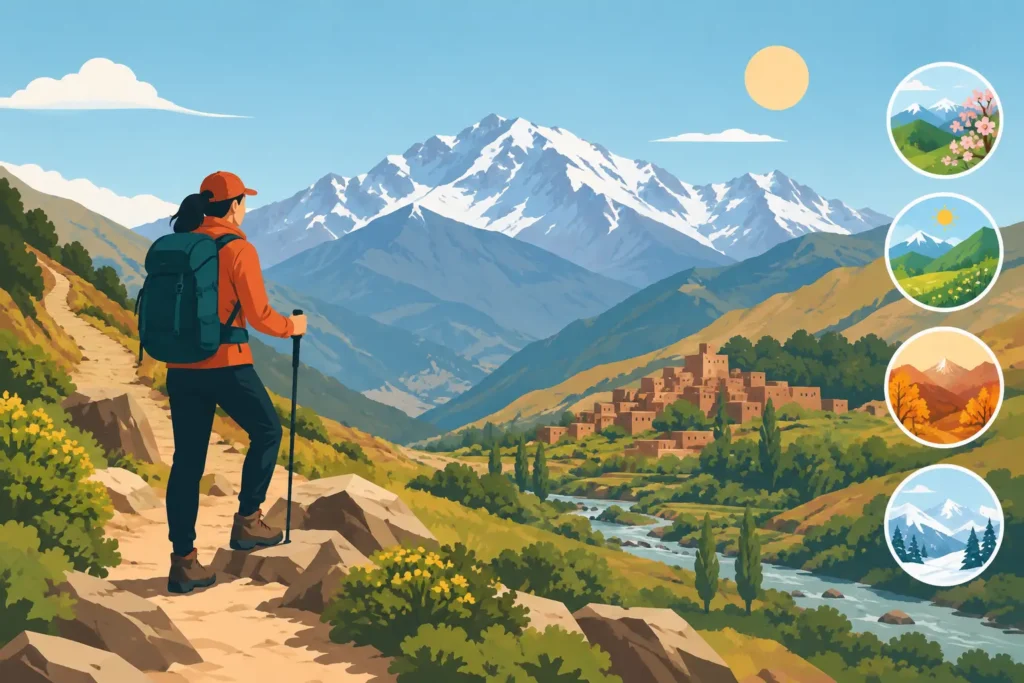
Atlas hiking is where Morocco’s dramatic landscapes become personal. A few hours from Marrakech, the traffic and medina streets give way to walnut groves, terraced fields, Berber villages and high ridges where the air feels noticeably cooler. Whether you want a gentle valley walk or a demanding summit expedition, the right route and local support make all the difference.
The Atlas Mountains are not one single hiking area. They cover a vast range with very different altitudes, terrain, village life and levels of comfort. Choosing well is less about finding the hardest trail and more about matching the journey to your fitness, available time and the kind of Moroccan holiday you want.
Atlas hiking in Morocco: choose your route
For many first-time visitors, Imlil in the High Atlas is the natural starting point. It is around 90 minutes from Marrakech and sits beneath Mount Toubkal, North Africa’s highest peak at 4,167 metres. Imlil offers a genuine mountain setting without requiring a long transfer, making it ideal for a day hike, a two-night escape or the beginning of a summit trek.
A full Toubkal ascent is rewarding, but it is not a casual walk. Most travellers need two or three days from Imlil, including time to reach the mountain refuge and manage the altitude. The final approach is steep, often cold and can be snowy outside the warmer months. A good level of fitness, suitable boots and an experienced mountain guide are essential. The summit is best for active travellers who are comfortable with sustained uphill walking rather than visitors simply looking for scenic views.
If you prefer a lower-altitude experience, the villages around Imlil provide excellent alternatives. Walk between Aroumd, Tizi Oussem and nearby valleys, pause for mint tea in a family-run guesthouse, and enjoy broad views without sleeping at high elevation. These routes are particularly suited to couples, families with capable older children and anyone adding mountains to a wider Marrakech and Sahara itinerary.
The Ait Bouguemez Valley, often called the Happy Valley, is another outstanding choice. It takes longer to reach, but that distance is part of its appeal. The valley feels quieter and more rural, with adobe villages, cultivated fields and walking trails that reveal daily life in the High Atlas. It is a strong option for travellers who value cultural immersion as much as mountain scenery.
For experienced hikers with more time, the M’Goun Massif offers a wilder multi-day adventure. Treks here can include high passes, remote valleys and nights in simple village accommodation or camps. Conditions are more variable and logistics need more careful planning, but the sense of space is exceptional. This is not the route to squeeze into a rushed weekend, yet it can become the highlight of a longer private Morocco tour.
Closer to Marrakech, the Ourika Valley and the trails near Setti Fatma suit visitors seeking a lighter day outdoors. The scenery is beautiful, but popular areas can be busy, particularly at weekends and during school holidays. A private guide can help you choose quieter paths and time the walk to avoid the busiest parts of the valley.
The best season for the Atlas Mountains
Spring, from April to May, is one of the best periods for hiking. Valleys are green, wildflowers appear, and daytime temperatures are usually comfortable. Snow may still affect higher Toubkal routes, so the exact itinerary should be checked close to departure.
Autumn, especially September through November, is equally attractive. The summer heat has eased, skies are often clear and trails are generally dry. September can still feel warm at lower elevations, while November nights become cold in the mountains. For a balanced itinerary combining Marrakech, the Atlas and the desert, October is often an excellent choice.
Summer works well for lower walks that start early, but midday heat can be demanding. Higher treks remain possible, although you should carry plenty of water and pace the day carefully. Winter brings crisp views and fewer visitors, but snow and ice can turn a high-altitude hike into a technical undertaking. Toubkal winter ascents require the proper equipment, conditions assessment and a guide with current local knowledge.
Weather in the Atlas is never only about the month. A sunny morning can change quickly at altitude, and rainfall may make rocky paths slippery. Build flexibility into your plans, particularly if hiking is one part of a multi-stop Morocco holiday.
How fit do you need to be?
You do not need to be an athlete to enjoy the Atlas Mountains. For a valley walk, the key is being able to walk steadily on uneven ground for several hours. Expect stone paths, loose sections, steps and gradual climbs that can feel harder than a city walk. Good footwear and a realistic pace matter more than speed.
For multi-day treks, prepare in advance with regular walks, hill training and some stair climbing. Your guide can tailor daily distances, but steep terrain still requires stamina. Be open about any knee issues, medical conditions or concerns with heights before the route is confirmed. A private itinerary is valuable here because it allows for shorter stages, more rest stops and accommodation selected around your comfort level.
Altitude deserves respect. Above roughly 2,500 metres, some travellers may experience headache, poor sleep or fatigue. Go up gradually, drink water regularly and tell your guide if symptoms become worse. Pushing through is never the right decision when altitude is involved.
What to pack for Atlas hiking
Mountain weather can shift quickly, even when Marrakech is warm. Layers allow you to adjust throughout the day, while a small daypack keeps the essentials close at hand. For most spring and autumn hikes, bring:
- Broken-in hiking boots with good grip
- A warm mid-layer and a waterproof outer jacket
- Sun cream, sunglasses and a sun hat
- A reusable water bottle or hydration pack
- Personal medication, blister plasters and a small torch
For a high-altitude trek, add warmer clothing, gloves and thermal layers. Your exact packing list should reflect the season, route and whether luggage will be carried by mule or vehicle. Avoid arriving with brand-new boots for a multi-day trek, as blisters can quickly spoil an otherwise memorable experience.
Why a local guide changes the experience
Atlas trails are not always signposted in the way many British hikers expect. Routes may pass through cultivated land, fork beside dry riverbeds or continue across rocky slopes with no obvious markings. A qualified local guide brings navigation, safety awareness and a far richer understanding of the villages you pass through.
The cultural side matters just as much. The High Atlas is home to Amazigh communities with distinct traditions, architecture and agricultural rhythms. A respectful guide can explain local customs, arrange meals in appropriate places and help ensure photography and village visits are handled thoughtfully. You are not simply passing through a landscape; you are a guest in a lived-in mountain region.
For private travel, a guided hike also simplifies the practical details. Transport can be arranged from Marrakech, bags can be transferred where appropriate, and the pace can be adapted to your group. Morocco Customised Tours plans these details with Moroccan-born guides and drivers, allowing travellers to focus on the walk rather than road directions, timings and changing mountain conditions.
Building the hike into your Morocco itinerary
A day in Imlil works well before or after time in Marrakech. Leave the city after breakfast, walk through a valley and return by evening, or stay overnight for a calmer rhythm and an early start the following day. This is the most practical choice if your holiday is limited to a week.
With three to five days, you can make the mountains a central part of the trip. Combine village walks, a scenic pass and nights in mountain guesthouses before continuing towards Ait Ben Haddou, Ouarzazate and the Sahara. The route creates a satisfying change of scenery: city, mountains, kasbah country and desert.
A dedicated trekking holiday needs more room. Allow time for acclimatisation, weather contingencies and recovery after longer days. Trying to combine a Toubkal summit, Fes, Chefchaouen and Merzouga in a short itinerary usually means too much driving and too little time to enjoy any one place. It is better to choose a focused route and travel well.
Atlas hiking rewards travellers who slow down enough to notice the details: irrigation channels beside a path, bread baking in a village home, the call of goats across a valley and the late-afternoon light on red mountain walls. Choose a route that suits your pace, leave room for the unexpected, and let the mountains set the rhythm of your Moroccan journey.