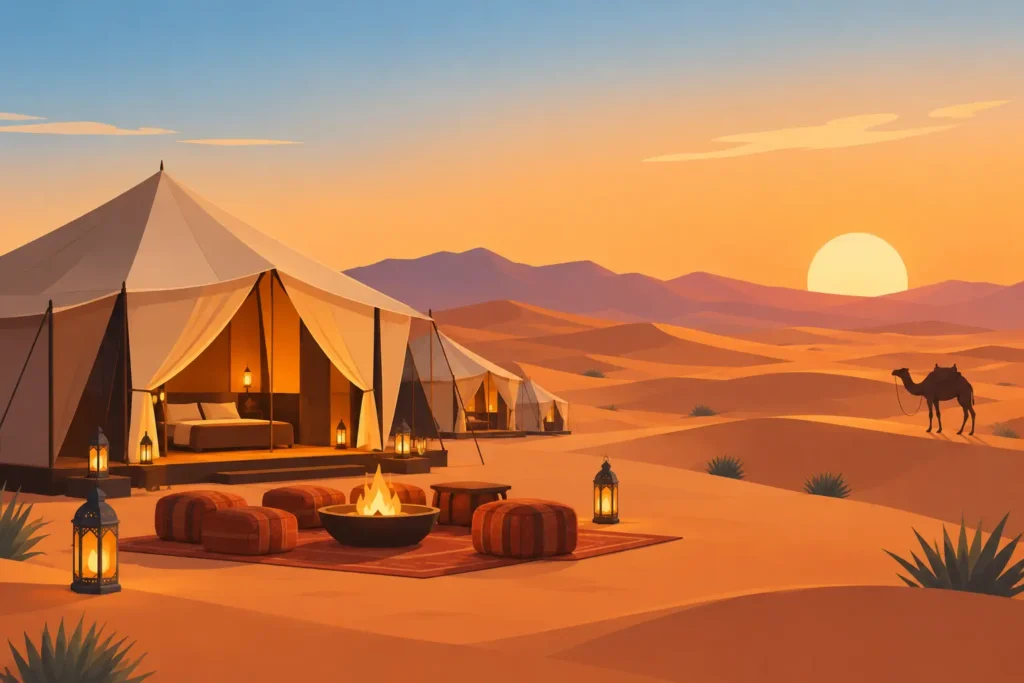
The final stretch towards the dunes is where Morocco changes pace. Paved roads give way to desert tracks, villages become smaller, and the sand begins to rise in soft gold waves. A night in one of Morocco’s Sahara camps is not simply accommodation between destinations. It is the moment many travellers remember most clearly: tea at sunset, a traditional dinner under the stars, and the quiet of the desert after the day’s driving is over.
For first-time visitors, choosing the right camp can feel confusing. There are basic nomad-style camps, comfortable standard camps, and high-end luxury camps with private bathrooms and hotel-level service. The best choice depends on your route, budget, travel style and how much time you have in Morocco.
Where are the best Sahara camps in Morocco?
Most travellers stay near Merzouga, on the edge of Erg Chebbi, Morocco’s most famous dune field. These are the tall, photogenic dunes seen in many classic Morocco itineraries. Merzouga is the most practical choice for guests travelling from Marrakech or Fes, especially on a three- or four-day private desert tour. It offers the widest choice of Sahara camps, straightforward access and a strong range of activities.
A typical route from Marrakech crosses the High Atlas Mountains, visits Ait Ben Haddou and continues through Ouarzazate, the Dades Valley and Todra Gorge before arriving in Merzouga. From Fes, the journey usually passes through Ifrane, the cedar forests near Azrou, Midelt and the Ziz Valley. Both routes show very different sides of Morocco before reaching the Sahara.
Erg Chigaga, near M’Hamid, is the more remote alternative. The dunes are wilder and camps feel further removed from busy towns, but reaching them requires more driving and usually a 4×4 transfer across desert terrain. This option suits travellers with extra time who want a more secluded desert experience. For a first Morocco holiday with limited days, Merzouga is often the better balance of comfort, scenery and travel time.
What to expect at Sahara camps
Your desert experience normally begins in the late afternoon. Depending on the camp location and your preference, you may arrive by camel, 4×4 or a combination of both. Camel trekking is memorable at sunset, but it is not compulsory. Some guests, including families with young children or travellers with back concerns, prefer to travel by vehicle and enjoy the dunes on foot once they arrive.
After settling into your tent, there is usually time to watch the sun set over the sand. Dinner is served in a dining tent or open courtyard, often with Moroccan soup, salad, tagine, couscous, fruit and mint tea. Many camps include local music around a fire, although the atmosphere varies. A good camp should feel welcoming rather than overly staged, leaving space for guests to enjoy the night sky and the stillness of the desert.
The following morning starts early. Sunrise is beautiful over Erg Chebbi, particularly when the dunes are still untouched by tracks. Breakfast is normally served before the return journey to Merzouga or the next stop on your itinerary.
Standard camps versus luxury camps
Standard Sahara camps offer a comfortable, authentic base in the dunes. Tents generally have proper beds, bedding, lighting and shared bathroom facilities. They are an excellent option for travellers who value the experience of sleeping in the desert and do not need every hotel convenience.
Luxury camps provide more privacy and comfort. Expect larger tents, quality mattresses, private bathrooms or en-suite facilities, hot water where practical, charging points and more refined dining. Some camps have beautifully designed lounges, rugs, lanterns and terraces facing the dunes. They are particularly popular with couples, honeymooners, families and guests adding a premium desert stay to a private Morocco tour.
The word “luxury” can mean different things in a desert environment. Even the best camp is still shaped by its remote setting. Wi-Fi may be limited, sand can reach pathways, and water use needs to be sensible. That is part of the experience. The real difference is thoughtful service, reliable facilities, good food and a tent that feels genuinely restful after a day on the road.
Choosing Sahara camps that suit your itinerary
Do not choose a camp from photographs alone. Ask where it is located, how you will reach it, whether your tent has a private bathroom, and what is included in the price. A camp close to the dune edge may involve a short transfer, while a deeper-dune camp can offer stronger views and greater seclusion but requires a longer journey by camel or 4×4.
Your arrival time matters too. A route that tries to reach Merzouga from Marrakech in one day is long and tiring, leaving little chance to enjoy the desert properly. For most visitors, a minimum three-day Marrakech to Merzouga itinerary is more comfortable. Four days allows a gentler pace, with proper stops in the valleys and gorges. From Fes, two or three days can work well depending on whether you continue towards Marrakech.
At Morocco Customised Tours, we plan private desert routes around the experience you want, not a fixed coach timetable. That means choosing a camp level that suits your holiday, arranging reliable transfers, and allowing enough time for sunset, dinner and sunrise rather than treating the Sahara as a rushed overnight stop.
The best time for a desert camp stay
Spring and autumn are the most popular seasons for Sahara camps in Morocco. From March to May and September to November, daytime temperatures are generally more comfortable for travelling, camel rides and time outside the tent. Even then, nights can be cool, particularly in March, April, October and November.
Summer brings intense daytime heat. A desert stay is still possible, but activities should be planned carefully, with later arrivals and less time outdoors in the middle of the day. Luxury camps with better ventilation and private facilities can make a noticeable difference during hot periods.
Winter days are often sunny and pleasant, but desert nights can be cold. Temperatures may fall close to freezing between December and February. Camps provide blankets, yet warm layers are essential. If you enjoy crisp air, clear skies and quieter roads, winter can be a rewarding time to visit as long as you pack properly.
What to pack for one night in the dunes
Pack a small overnight bag and leave larger luggage in your vehicle where possible. Soft, practical layers work best because the temperature can change quickly between afternoon and night. Bring a warm jumper or fleece, light jacket, comfortable closed shoes, sunglasses, sun cream and a scarf or shawl for windblown sand.
A small torch is useful even in camps with lighting. Keep your phone, camera and power bank charged before leaving town, as electricity may be limited. For photography, sunrise and sunset offer the best light, but do not spend the whole evening behind a screen. The desert has a way of rewarding travellers who simply sit still for a while.
Comfort, safety and respectful desert travel
The Sahara is welcoming, but it is not a place for improvising. Travel with an experienced local driver or guide who knows the roads, weather conditions and camp teams. This is particularly valuable after rainfall, when some tracks can change, or when travelling with children, older relatives or guests with specific mobility needs.
Respect for the environment matters as well. Desert water and energy are limited resources. Use water thoughtfully, avoid leaving rubbish behind, and choose operators who work with local staff and communities. A well-run camp should combine guest comfort with care for the landscape that makes the stay possible.
It is also worth being realistic about camel rides. They are a traditional way to approach the dunes and can be a lovely part of the evening, but they are not suitable for everyone. Tell your tour planner in advance if you would prefer a 4×4 transfer, a shorter ride, or no camel ride at all. A private itinerary should adapt to you.
A Sahara camp stay is at its best when it has room to breathe. Give yourself enough days to reach the desert without rushing, choose the level of comfort that will let you sleep well, and let a local team handle the details. When the camp lights fade and the dunes turn silver under the moon, the journey there will feel entirely worthwhile.