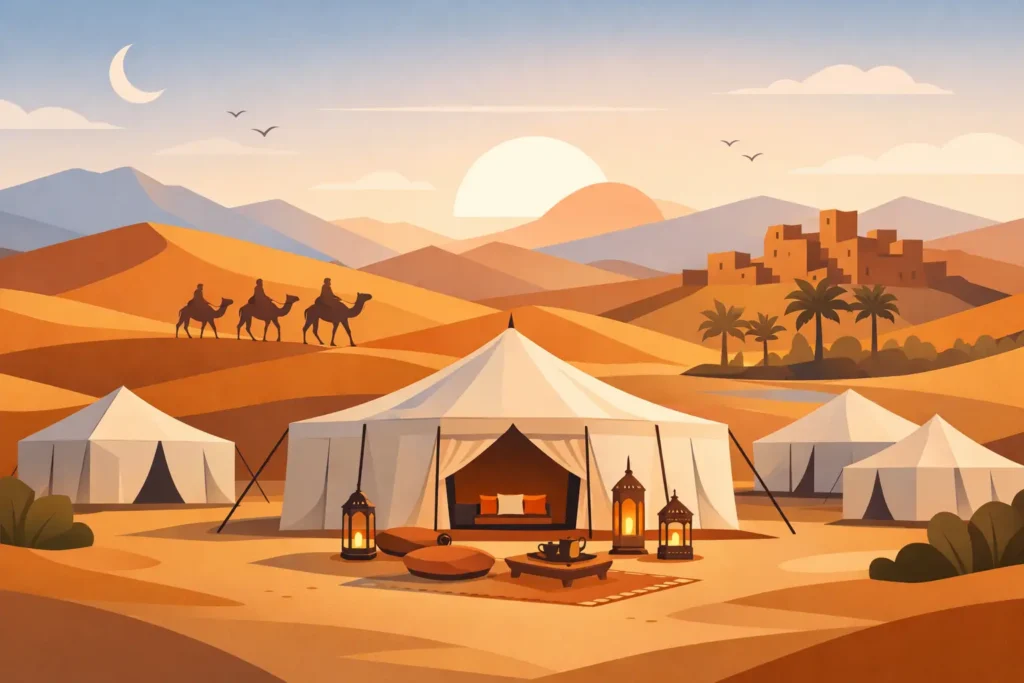
A Sahara camp is not simply a hotel room placed in the sand. It is the point in a Morocco itinerary when the road ends, the dunes take over, and the pace changes completely. This Morocco desert camp review explains what travellers should realistically expect from a night in Merzouga, how standard and luxury camps differ, and which details make the experience feel special rather than stressful.
For most visitors, a desert camp is part of a wider route from Marrakech or Fes through the Atlas Mountains, kasbah country and the dramatic valleys of southern Morocco. After a long but rewarding drive, the final arrival at Erg Chebbi’s golden dunes should feel well organised, welcoming and unhurried.
What a Morocco desert camp stay is really like
Most camps sit near or within the Erg Chebbi dunes outside Merzouga. Depending on the camp’s location and the season, you may arrive by 4×4, camel trek, or a combination of both. A short camel ride at sunset is a memorable choice for many first-time visitors, but it is not compulsory. Guests with young children, limited mobility, or a preference for comfort can usually travel to camp by 4×4.
The setting is the real headline. At sunset, the dunes shift from pale gold to deep orange, and after dark the silence is striking. Even a well-run camp with music and dinner service feels far removed from city life. The experience is less about ticking off an attraction and more about having time to watch the desert change.
Expect a practical rhythm: arrival in the late afternoon, time for sunset, dinner at camp, music by the fire or in the communal tent, then a quiet night under a vast sky. The following morning starts early enough to catch sunrise before breakfast and departure.
Standard versus luxury desert camps
The word “camp” can mean very different things in the Sahara. Reading the room category alone is not enough. Ask what is inside the tent, where the bathroom is located, and how far the camp is from the road or dunes.
Standard camps
A standard camp offers a genuine desert overnight experience at a more accessible price. Tents are usually simple but comfortable, with proper beds, blankets, lighting and shared dining areas. Some have shared bathroom facilities, while others provide private bathrooms in selected tents.
This option suits travellers who want the atmosphere of the Sahara without placing luxury at the centre of the trip. It can be an excellent choice for families, friends and private groups, particularly when the overall itinerary includes several nights in riads and hotels.
The trade-off is straightforward. Amenities may be more basic, hot water can be limited, and the décor is less refined. The desert itself, however, remains every bit as beautiful.
Luxury camps
Luxury desert camps are designed for travellers who want the landscape without giving up key comforts. Expect larger tents, quality bedding, private en-suite bathrooms, solar electricity, attractive furnishings and attentive hosting. Many also offer a more polished dining setting and space to relax privately after sunset.
A luxury camp is especially worthwhile for couples celebrating a special occasion, travellers booking a private Morocco tour, or anyone who prefers a quieter, more comfortable night after a full day on the road. Some camps have fixed beds rather than temporary sleeping arrangements, which makes a noticeable difference in cooler months.
Luxury does not mean a city hotel in the dunes. Water and electricity are carefully managed in the desert, and Wi-Fi may be limited or unavailable. That is part of the setting. A good camp balances comfort with respect for the environment and the realities of its location.
The details that shape a good desert camp review
When comparing camps, focus on the practical details that affect your stay rather than relying only on photographs. Beautiful images can show a tent at its best, but they rarely explain the journey to camp, the facilities or the level of privacy.
First, consider the camp location. Some camps are close to the edge of the dunes, making access easier but the views less immersive. Others lie deeper in Erg Chebbi, offering a stronger sense of isolation and better dune scenery. Neither is automatically better. A deep-dune camp is ideal for travellers seeking a classic Sahara atmosphere, while a closer camp can suit those who prefer a shorter transfer or are travelling with children.
Second, ask whether the camp is private or shared. A private tent is different from a fully private camp. For honeymoons, anniversaries or small groups, reserving a private setup can create a calmer and more personal evening. Shared camps are sociable and often include live traditional music, but they can be livelier than some guests expect.
Third, look at meal arrangements. Dinner is normally Moroccan and often includes soup, salad, tagine, couscous, fruit and mint tea. Vegetarian, vegan, gluten-free and other dietary requirements can be accommodated when communicated in advance. The best operators confirm these arrangements before departure rather than leaving them to chance on arrival.
Finally, ask about heating and air conditioning. Winter nights in the Sahara can be very cold, particularly from December to February. Summer days are extremely hot, although evenings may become more pleasant. Camps vary in how they manage seasonal conditions, so the right tent and bedding matter more than travellers often realise.
Comfort, cleanliness and safety in the Sahara
A quality camp should provide clean bedding, a well-maintained tent, safe drinking water and a clear plan for arrival and departure. Private bathrooms should have functioning toilets and showers, though hot-water availability can depend on solar systems and demand. This is worth clarifying if a hot shower is essential to you.
The dunes are generally safe for visitors when the experience is managed by local professionals. Still, the desert deserves sensible preparation. Wear closed shoes or secure sandals for walking on sand, carry a light layer for the evening, and protect your eyes and skin during the day. Sand gets everywhere, so keep cameras and mobile phones in a small bag when not in use.
Camel rides are optional, and there is no need to feel pressured into a long trek. A short ride is enough for many guests to enjoy the experience and take photographs. If animal welfare is a priority, choose an operator that works with well-cared-for camels, provides appropriate breaks and offers 4×4 transfers as a genuine alternative.
Is one night enough in the desert?
For many first-time visitors, one night is enough to experience sunset, dinner, stars and sunrise. It fits well into popular routes such as Marrakech to Merzouga via Ait Ben Haddou, Ouarzazate and the Dades Valley, or Fes to Marrakech through the Sahara.
Two nights offer a different kind of value. With an extra day, there is time for a 4×4 excursion around the dunes, a visit with a Gnawa community in Khamlia, a stop at seasonal lakes, or simply a slower morning at camp. This is the better choice for travellers who dislike rushed itineraries or want to photograph the desert in different light.
The decision depends on your wider holiday. If you have only a week in Morocco and also want to see Marrakech, Fes and Chefchaouen, one well-planned night can be the right balance. If the Sahara is a major reason for your trip, give it two nights and let the journey breathe.
When to book your Sahara camp
Spring and autumn usually provide the most comfortable conditions for a desert stay. March to May and September to November bring pleasant daytime temperatures, though weather can still change quickly. Winter offers clear skies and quiet camps but requires warm clothing for the evening. Summer can work for travellers who tolerate heat well, especially with an early start, air-conditioned transport and a luxury camp selected for comfort.
Book early for school holidays, Christmas, New Year and Easter, when the best private tents and luxury camps can sell out. If you are arranging a tailored route, include the camp choice from the beginning rather than treating it as a last-minute add-on. Transfer timing, room type and activities all affect the quality of the overnight experience.
A thoughtfully chosen desert camp turns a long drive to Merzouga into one of the most memorable parts of Morocco. With local planning, a camp that matches your comfort level, and enough time to enjoy the quiet, the Sahara will feel less like a stop on an itinerary and more like the moment you came to Morocco to find.