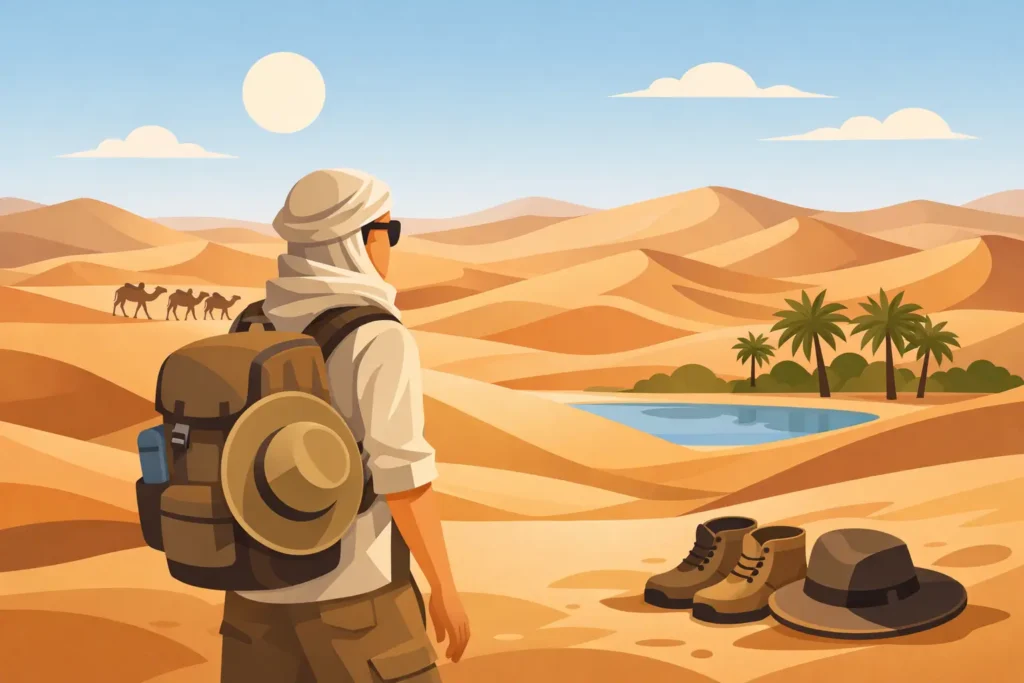
The first surprise for many travellers is that the Sahara is not just hot. By midday, the sun can feel intense, but after sunset the temperature can drop quickly, especially from autumn to spring. That is why knowing what to wear in Sahara conditions matters so much. The right clothing makes your desert camp, camel ride and long road journey far more comfortable, and it helps you enjoy the landscape instead of battling heat, cold or blowing sand.
For most visitors heading to Merzouga or another Moroccan desert region, the best approach is simple: light layers, loose fits and full sun protection. You do not need specialist expedition gear. You do need practical clothes that work across changing temperatures and different parts of your itinerary, whether you are starting in Marrakech, Fes or Casablanca.
What to wear in Sahara during the day
In the daytime, your clothing should help your body stay cool while keeping the sun off your skin. Many first-time visitors assume shorts and strappy tops are the best option, but in the desert they are often less comfortable than light, long clothing. Direct sun on exposed skin can feel harsh very quickly, and sand can be irritating as well.
A breathable long-sleeved shirt is usually the best top layer. Linen and lightweight cotton work well, and modern moisture-wicking fabrics can also be a good choice if they are not too clingy. Loose sleeves create airflow and reduce the risk of sunburn. For the lower half, lightweight trousers are generally more practical than shorts. They protect your legs during camel rides, keep sand off your skin and feel more appropriate if your journey also includes villages, kasbahs or stops in local towns.
Colour matters, but not as much as fabric and fit. Pale shades such as beige, white, sand, light grey or soft blue reflect heat better and feel more comfortable under strong sunlight. Dark colours can still work if the fabric is airy, so there is no need to rebuild your wardrobe around one rule. Comfort comes first.
What to wear in Sahara at night
Even in warmer months, evenings in the desert can feel cool once the sun disappears. In winter, nights can be properly cold. This catches people out more often than the daytime heat.
A fleece, light jumper or insulated jacket is worth packing for any Sahara trip. If you are travelling between November and March, bring a warmer outer layer than you think you will need. Desert camps can be comfortable and well prepared, but the air temperature is still the air temperature. Sitting outside under the stars is one of the highlights of the experience, and you will enjoy it much more if you are warm enough to stay out.
Layering is the safest strategy. A T-shirt, long-sleeved top and warm jacket usually gives enough flexibility. If you run cold easily, add a scarf and thermal top for winter departures. This is especially useful on early morning starts when the desert is at its coldest.
The best fabrics for desert travel
Fabric choice can make a bigger difference than brand or style. Natural fibres like cotton and linen are popular because they breathe well and feel comfortable on the skin. They are excellent for dry heat, which is what most travellers experience in the Moroccan Sahara. The trade-off is that cotton can feel heavy if you sweat a lot, so some travellers prefer technical travel fabrics that dry quickly.
The ideal option is usually clothing that is lightweight, non-restrictive and easy to layer. Avoid heavy denim, thick hoodies for daytime wear and anything too tight. Jeans are especially awkward in the desert. They trap heat during the day, feel stiff for camel riding and take longer to dry or air out.
If you are packing for a private Morocco itinerary with several climate zones, versatility helps. One pair of breathable trousers and two or three light tops will usually serve you better than lots of bulky items.
Footwear for dunes, camps and camel rides
Shoes are one area where travellers often overthink things. You do not need mountaineering boots for a standard Sahara trip. What you need is stable, comfortable footwear that you can walk in for short stretches over sand and uneven ground.
Closed trainers or lightweight walking shoes are the easiest option for most people. They protect your feet from sand and are practical for getting on and off a camel. Some travellers like sandals, especially in warmer months, but they are less useful in soft dunes because sand gets everywhere. If you do bring sandals, choose a secure pair rather than flimsy flip-flops.
For camp, it is fine to keep things simple. Many guests switch between walking shoes outdoors and lighter slip-on footwear around the tent area. Socks are worth having for cold evenings and winter mornings.
Essential accessories you should not skip
The desert sun is strong, and accessories are not just extras. A wide-brimmed hat or cap is one of the most useful things you can pack. Sunglasses with proper UV protection make daytime travel far easier, especially when the light reflects off pale sand.
A scarf is another smart item and one we often recommend. It can protect your neck from the sun, add warmth in the evening and cover your nose and mouth if the wind picks up. A lightweight cotton scarf or desert-style wrap works well and does not take much space in your bag.
Sunscreen is just as important as clothing, even if you are mostly covered. Apply it to your face, hands, neck and any exposed areas, and reapply during long outdoor periods.
What women should wear in the Sahara
For women, the best desert outfits are usually modest, breathable and easy to move in. A loose long-sleeved blouse with lightweight trousers or a long skirt can work very well. Leggings on their own are usually not the most practical choice, both for comfort and for cultural ease during wider Morocco travel. A tunic with relaxed trousers is often a better fit for camel trekking, camp stays and roadside stops.
There is no strict dress code in tourist desert areas, and visitors are welcomed warmly. Still, clothing that offers a bit more coverage tends to feel more comfortable across the whole journey. It is useful in the sun, practical for the desert and respectful when visiting local communities.
What men should wear in the Sahara
For men, a light shirt and breathable trousers or travel trousers are usually the best combination. Shorts are possible in hotter months, but they are often less comfortable on camel rides and provide less protection from sun and sand. Many male travellers find that lightweight trousers become the more practical option after the first hour outdoors.
A cap, sunglasses and a light layer for the evening are the basics. If your trip includes luxury desert camp accommodation, there is no need for formalwear. Smart-casual, comfortable clothing is more than enough.
Seasonal packing advice
What to wear in Sahara conditions changes slightly by season. From late spring to early autumn, the key challenge is strong sun and daytime heat, so lighter fabrics and sun protection matter most. Even then, a layer for night is still wise.
From November to March, the balance shifts. Daytime can still be pleasant and sunny, but the evenings and early mornings are much colder. That is when a proper jacket, warm socks and extra layers become essential rather than optional.
If your tour combines the desert with the Atlas Mountains, expect more variation. You may leave a mild city morning, cross cooler mountain passes and reach warm desert sunshine by afternoon. This is one reason our team always advises travellers to pack in layers rather than around one fixed forecast.
A simple Sahara packing approach
For most travellers, one practical daytime outfit, one evening layer and a few key accessories are enough. You do not need to overpack. The Sahara experience is about movement, comfort and enjoying the landscape, not changing outfits for every stop.
A reliable combination would be breathable trousers, a light long-sleeved shirt, comfortable closed shoes, sunglasses, a hat and a scarf, with a warm layer packed for the evening. If your journey is tailored with Morocco Customized Tours, we can also advise based on your month of travel, route and camp standard so you arrive properly prepared.
The desert rewards simple choices. Dress for the sun, plan for the cold after dark, and leave a little room in your bag for comfort. When your clothing works with the landscape instead of against it, the Sahara feels exactly as it should – calm, striking and unforgettable.