Ten days in Morocco goes quickly, which is exactly why the right route matters. A well-planned 10 days best of Morocco itinerary should not try to cram in every corner of the country. It should give you the big highlights, enough time to enjoy them properly, and the kind of local guidance that keeps the trip smooth from arrival to departure.
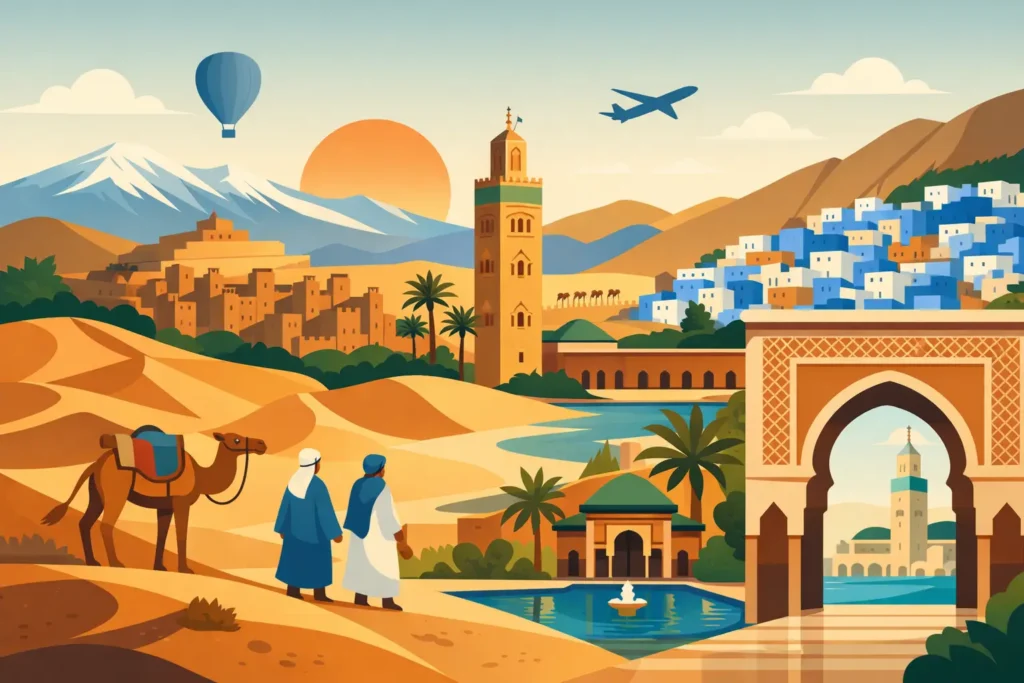
For most first-time visitors, the strongest 10-day route combines Marrakech, the Atlas Mountains, Ait Ben Haddou, the Sahara Desert, Fes, Chefchaouen, and Casablanca or Tangier for departure. This is the version of Morocco many travelers hope to experience – colorful souks, historic medinas, mountain roads, desert camps, and blue-painted alleyways – without wasting precious days on backtracking.
Why a 10 days best of Morocco trip works so well
Ten days is the sweet spot for travelers who want variety without turning the vacation into a race. In one trip, you can experience the energy of Marrakech, the changing landscapes of the High Atlas, the cinematic kasbahs of the south, the dunes of Merzouga, and the spiritual depth of Fes. If you add Chefchaouen, you also get a softer, slower finish before heading out.
The trade-off is simple. You can see a lot in 10 days, but Morocco is larger than many visitors expect. Distances between major highlights are real, especially if you want to include the desert. That is why private transportation and a well-structured route make such a difference. Good planning does not just save time. It improves the quality of each day.
A realistic 10 days best of Morocco route
A practical route for first-time travelers usually begins in Marrakech and ends in Casablanca or Tangier. Starting in Marrakech gives you an easy introduction to Morocco. Ending farther north avoids unnecessary return drives and keeps the itinerary efficient.
Days 1-2: Marrakech
Your first two days are best spent in Marrakech. After a long international flight, this city gives you immediate atmosphere without requiring another transfer. You can settle into a riad, adjust to the pace of travel, and start with the essentials: Jemaa el-Fnaa, the souks, Bahia Palace, Majorelle Garden, and the medina.
Marrakech is lively, sensory, and sometimes intense for first-time visitors. That is exactly why many travelers appreciate having a local guide here. The city opens up differently when someone can explain where to go, how the neighborhoods connect, and which parts are worth your time.
Day 3: Marrakech to Ait Ben Haddou through the Atlas Mountains
This is one of the most scenic driving days in the country. You cross the High Atlas Mountains by way of the Tizi n’Tichka pass, stopping for panoramic views and traditional villages along the way. By afternoon, you reach Ait Ben Haddou, Morocco’s most famous ksar and a UNESCO-listed site known for its earthen architecture.
Some travelers prefer to continue to Ouarzazate for the night, while others stay near Ait Ben Haddou for a quieter setting. It depends on whether you want a more atmospheric evening or a hotel base with a few more amenities.
Day 4: Ait Ben Haddou to the Dades Valley or Todra Gorge
From the kasbah region, the route heads deeper into southern Morocco. You pass Ouarzazate, the Valley of Roses, and scattered palm groves before reaching either Dades Valley or Todra Gorge.
This stop is important because it breaks up the drive to the desert and adds another side of Morocco to the trip. The landscape here is dramatic but very different from the dunes. Rocky canyons, kasbah towns, and green river valleys give the journey more texture.
Day 5: Toward Merzouga and the Sahara Desert
This is the day many travelers remember most. As you continue toward Merzouga, the scenery changes again. Dry plains give way to date palm oases and finally the edge of the Erg Chebbi dunes.
By late afternoon, you transfer to a camel ride or 4×4 into the desert camp. Sunset over the dunes is the classic moment, but the overnight stay is what makes it meaningful. A good camp balances comfort with atmosphere – private tents, proper bedding, hot meals, and enough quiet to appreciate where you are.
Luxury camps are a strong option for couples, families, and anyone who wants the desert experience without sacrificing comfort. Standard camps can be enjoyable too, but there is a clear difference in facilities and privacy.
Day 6: Merzouga to Fes
The drive from Merzouga to Fes is long, but it shows yet another face of the country. You travel through Erfoud, Midelt, cedar forests, and the Middle Atlas, often with a stop in Ifrane, known for its alpine-style architecture.
This is one of the biggest transfer days of the trip, so expectations should be realistic. It is a travel day more than a sightseeing day. Still, if the vehicle is comfortable and the pacing is handled well, it becomes part of the experience rather than a burden.
Days 7-8: Fes
Fes deserves at least one full day, and ideally two nights. Its medina feels older, denser, and more rooted in tradition than Marrakech. Here, guided touring is even more valuable. The city is layered with history – madrasas, artisan quarters, tanneries, mosques, and narrow lanes that can be difficult to navigate independently.
Travelers interested in craftsmanship, architecture, and Moroccan religious history often find Fes to be the most rewarding city on the itinerary. It is less polished than some destinations, but that is part of its strength. It feels lived in, not staged.
Day 9: Fes to Chefchaouen
Chefchaouen brings a different rhythm. After the intensity of imperial cities and long desert drives, the blue town offers a softer day with mountain air, walkable streets, and a relaxed atmosphere.
For photographers, couples, and travelers who want a gentle final stop, Chefchaouen is worth including. The trade-off is that it adds more driving overall. If your priority is a deeper stay in Marrakech or Fes, this is the destination most commonly removed from a 10-day route. If visual charm and variety matter to you, keep it.
Day 10: Departure via Casablanca or Tangier
The final day depends on your outbound airport. Tangier is a more natural finish if Chefchaouen is your last overnight stop. Casablanca works better if your itinerary has been adjusted to include Rabat or if your international flight options are stronger there.
This is where custom planning matters. The best route is not just about what looks good on paper. It should match your arrival city, departure airport, pace, and budget.
What this itinerary includes – and what it does not
A strong 10-day Morocco trip can cover the country’s most requested highlights, but it cannot cover everything well. Coastal stops like Essaouira are excellent, but they usually make more sense on a dedicated western route. The same goes for a deeper northern trip including Tangier, Tetouan, and Asilah.
If the Sahara is non-negotiable, some destinations have to stay off the list. That is not a weakness. It is smart travel planning. Morocco rewards focus.
Private travel makes a big difference in Morocco
Morocco is a country where logistics shape the experience. Train travel works well between certain cities, especially Casablanca, Rabat, and Fes, but it does not solve a desert itinerary. Public transport can be done, yet it often turns a 10-day vacation into a series of transfers and timing compromises.
That is why many visitors choose a private tour with a dedicated driver. You move directly between destinations, stop where it makes sense, and adjust the day based on energy, weather, and interests. For families and couples especially, that flexibility often becomes the difference between a trip that feels rushed and one that feels well cared for.
With a local operator like Morocco Customized Tours, travelers also gain something less visible but equally important: on-the-ground judgment. Not every hotel, camp, or route is equal. Local knowledge helps you avoid weak overnight stops, tourist traps, and unrealistic timing.
When to travel for the best experience
Spring and fall are the easiest seasons for this itinerary. March through May and September through November usually offer the best balance for city touring, mountain drives, and desert nights.
Summer works if you are comfortable with heat, but Marrakech and the Sahara can be intense. Winter is often pleasant for cities, though desert nights can be very cold and mountain weather may slow the route. The trip is still very doable, but packing and expectations should shift with the season.
Is 10 days enough for Morocco?
Yes – if the route is focused. Ten days is enough for a memorable first trip that includes Morocco’s headline destinations and real regional variety. It is not enough to see everything, and trying to do so usually weakens the trip.
The best itineraries are built around flow, not just checklists. If you want the desert, imperial cities, and a taste of the north, 10 days is a strong fit. If you prefer long stays, beach time, or deeper exploration of one region, a slower custom route may serve you better.
The right Morocco trip should feel organized, comfortable, and full of moments you would not have found on your own. If your 10 days are planned with that in mind, you will leave with more than photos – you will leave feeling that you actually experienced the country, not just passed through it.