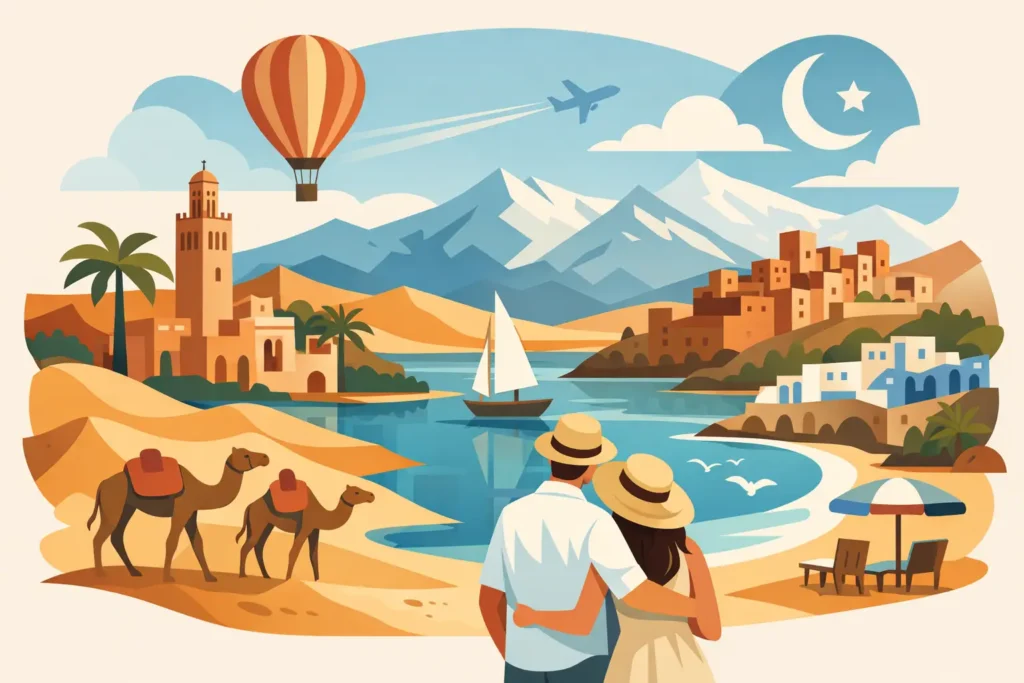
The best Morocco honeymoon itinerary example is not a rush between famous places. It is a journey with time for a private riad breakfast, a quiet mountain drive, a sunset over the dunes and unhurried evenings in Morocco’s most atmospheric cities. For couples who want culture, comfort and a real sense of place, this 10-day route pairs Marrakech, the Atlas Mountains, the Sahara Desert and Fes in one well-paced private holiday.
Morocco rewards couples who travel at a considered pace. Distances can be longer than they appear on a map, particularly on routes crossing the High Atlas. A private driver-guide makes the journey simpler, while allowing room to stop for photographs, a village tea or lunch with a view.
A 10-day Morocco honeymoon itinerary example
This route begins in Marrakech and ends in Fes, which avoids retracing your steps and gives each day a clear purpose. It works especially well for first-time visitors, though it can be refined for luxury travel, food-focused holidays or couples who prefer more time in the desert.
Day 1: Arrive in Marrakech
Your honeymoon begins with a private airport welcome and transfer to a carefully selected riad in the medina or a luxury hotel in the Palmeraie. A riad offers romance, character and the pleasure of staying behind old medina walls. A resort-style hotel provides more space, larger pools and easier vehicle access. The right choice depends on whether you want to step straight into the city’s energy or begin more quietly.
Keep your first evening light. Enjoy dinner on a rooftop or in the courtyard of your accommodation, then rest after your flight. Marrakech is lively, and there will be plenty of time to experience it properly tomorrow.
Day 2: Private Marrakech discovery
Spend the day with a local guide who can bring Marrakech’s layered history into focus. A private visit may include Bahia Palace, Ben Youssef Madrasa, the Saadian Tombs and the colourful souks around Jemaa el-Fna. The medina can feel intense when explored without direction, but a knowledgeable guide helps you move beyond the obvious stalls and understand the craftsmanship, traditions and neighbourhood life behind them.
In the afternoon, choose the pace that suits you. Couples can visit Majorelle Garden and the Yves Saint Laurent Museum, book a hammam experience, or return to their riad for time by the pool. For a honeymoon, leaving free time is not a luxury – it is part of the plan.
Day 3: Marrakech to the High Atlas Mountains
Leave Marrakech after breakfast for a scenic drive into the High Atlas Mountains. The road rises through changing landscapes, from olive groves and red-earth villages to broad mountain valleys. Depending on the season and your interests, stop at a local market, take a gentle guided walk or visit a women’s argan oil co-operative.
Stay in the Imlil area or the Ourika Valley, where boutique lodges and mountain kasbahs offer a peaceful contrast to Marrakech. The evening is for slow dining, clear air and views that make the city feel far away. Spring and autumn are ideal for walking; in winter, higher routes can be cold and occasionally affected by snow.
Day 4: Atlas Mountains to Ait Ben Haddou and Skoura
Today is one of Morocco’s classic road-trip days. Cross the High Atlas via the Tizi n’Tichka route, with photo stops selected according to weather and road conditions. Your driver-guide can adjust the journey when necessary, which is one reason private travel is preferable on this route.
Visit Ait Ben Haddou, the UNESCO-listed ksar known for its earthen architecture and dramatic setting. It is a popular stop, so an earlier or later visit often feels more relaxed than arriving with the largest coach groups. Continue to Skoura or Ouarzazate for the night. Skoura is particularly appealing for honeymooners who value calm gardens, palm groves and intimate kasbah-style accommodation.
Day 5: Skoura to the Sahara Desert
Drive east through the Valley of Roses and the Dades Valley, passing steep gorges, date palms and small settlements built in the same warm tones as the landscape. This is not simply a transfer day. It is a changing panorama of southern Morocco, and regular stops keep the long journey enjoyable.
By late afternoon, reach the edge of Erg Chebbi near Merzouga. Transfer by camel or 4×4 to your desert camp, depending on your preference and the camp location. Camel rides are memorable but not always comfortable for every traveller, so a 4×4 arrival is a perfectly good alternative. Watch sunset from the dunes, enjoy a Moroccan dinner and spend the night under a sky with very little light pollution.
Day 6: A slow Sahara morning and desert experiences
Do not leave the desert too early. Sunrise over the dunes is one of the moments couples remember most, especially after a night in a high-quality camp with a private tent and en-suite facilities. After breakfast, choose a desert experience: a 4×4 excursion to seasonal villages, tea with a local family, a visit to hear Gnawa music in Khamlia, or simply a relaxed morning at a desert lodge.
A second night in the Merzouga area gives the itinerary breathing room. It also means your Sahara experience is more than a quick overnight stop. For a premium honeymoon, this is worth the additional time and accommodation cost.
Day 7: Merzouga to Midelt
Travel north through the Ziz Valley, where long ribbons of palm trees follow the river beneath stark desert mountains. Stop for views over the valley before continuing towards Midelt. This town is practical rather than polished, but it breaks up the distance between the Sahara and Fes and prevents an exhausting full-day drive.
Choose a comfortable mountain hotel and enjoy a quiet evening. Couples who have only seven or eight days may skip this overnight stop, but the result is a much longer journey to Fes. For most honeymoon travellers, comfort is the better trade-off.
Day 8: Midelt to Fes
The landscape changes again as you pass through the Middle Atlas, known for cedar forests, cooler temperatures and mountain towns such as Ifrane. You may see Barbary macaques in the forest areas, although wildlife sightings are never guaranteed and should be approached respectfully.
Arrive in Fes in the afternoon and settle into a riad near the medina or a refined hotel outside the old city. Fes has a different character from Marrakech: less open and theatrical, more intricate, historic and deeply rooted in traditional crafts. Spend the evening enjoying a relaxed dinner with views across the rooftops.
Day 9: Guided Fes medina tour
Fes el Bali is best explored with a local guide. Its lanes are narrow, busy and full of surprises, from workshops and bakeries to madrasas, fountains and centuries-old trading spaces. A private guided tour can include the Royal Palace gates, the Jewish quarter of Mellah, Al-Attarine Madrasa, Nejjarine Museum and a panoramic viewpoint over the city.
The famous tanneries are a highlight, but Fes is most rewarding when you look beyond any single sight. Watch zellij tilework being made, learn how Moroccan leather is finished, or arrange a cooking lesson if food is central to your holiday. Your guide can tailor the day around your interests without sacrificing the essential landmarks.
Day 10: Departure from Fes
Enjoy a final Moroccan breakfast before your private transfer to Fes Airport. If your flight is later in the day, there may be time for a final stroll, a spa treatment or a last lunch in the medina.
How to tailor this Morocco honeymoon route
This itinerary is designed for balance, but every couple travels differently. If you prefer beach time, add two or three nights in Essaouira after Marrakech and shorten the northern section. If luxury is the priority, choose upgraded riads, private desert camps, fine dining reservations and a dedicated driver-guide throughout. If you are travelling in summer, plan earlier starts and prioritise air-conditioned accommodation, particularly in Marrakech and the Sahara.
The most enjoyable honeymoons also avoid trying to see every corner of Morocco in one trip. Chefchaouen, Casablanca and Tangier are wonderful destinations, but they fit better into a longer 12- to 14-day circuit or a separate northern itinerary. A thoughtfully planned route leaves space for the unexpected moments that make a holiday personal.
Morocco Customized Tours can adapt this route around your arrival city, preferred hotel style, dietary requirements and the experiences you want to share. Start with the places that matter most to you, then let local planning turn the distance between them into part of the romance.