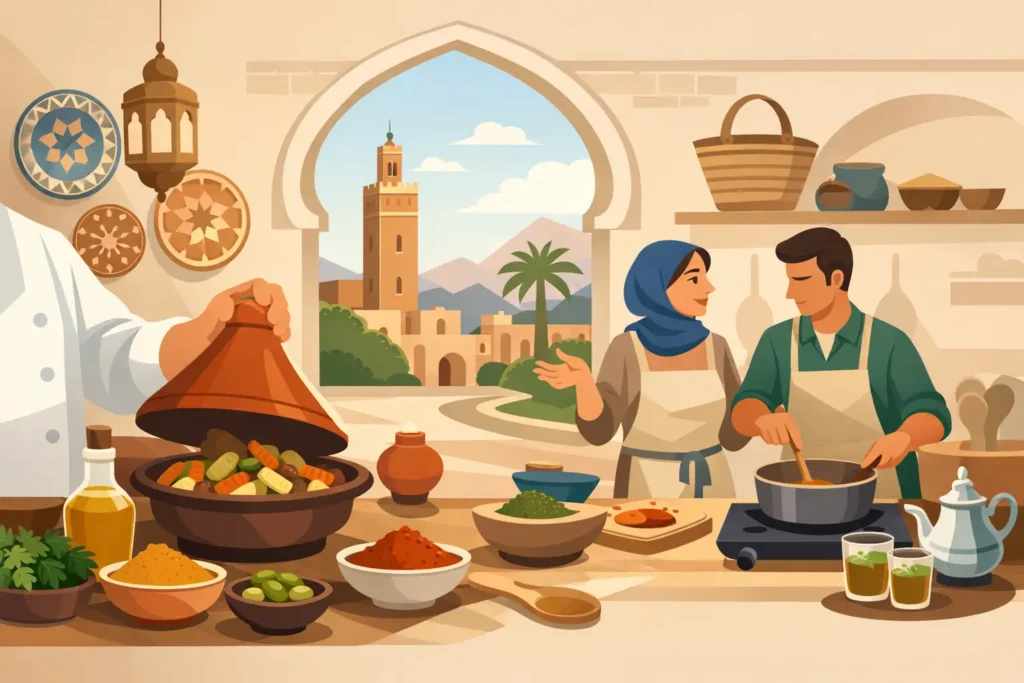
A Moroccan meal rarely begins at the table. It begins with the sound of a market opening, the scent of cumin and fresh mint, and a cook choosing vegetables one by one. The best Moroccan cooking classes bring you into that process, helping you understand not only how to make a tagine, but why the ingredients, timing and hospitality matter so much.
For travellers planning a private holiday, a cooking class is one of the most rewarding ways to slow down between busy days of medina sightseeing, Atlas Mountain drives or Sahara travel. You leave with practical skills, a fuller understanding of Moroccan culture and, usually, a very good lunch or dinner.
What makes a Moroccan cooking class worth booking?
A good class should feel like a genuine introduction to a Moroccan kitchen, not a rushed tourist activity. The strongest experiences are led by knowledgeable local cooks or chefs who explain the traditions behind the recipes while keeping the atmosphere relaxed and welcoming.
Look for classes that include several stages of the meal. A market visit is especially valuable in Marrakech and Fes, where a guide can introduce seasonal produce, preserved lemons, olives, herbs and the spice blends used in daily cooking. You may learn why one seller is chosen for saffron, how bread is selected for a shared meal, or how Moroccans judge the ripeness of tomatoes for a sauce.
The cooking itself should be hands-on. Watching a chef prepare everything can be enjoyable, but travellers who want to recreate the dishes at home should expect to chop, season, assemble and taste along the way. Small groups or private lessons are often the better choice if you have questions, dietary needs or a particular interest in Moroccan pastry, vegetarian food or regional recipes.
It also depends on your schedule. A three-hour city class may be ideal after a morning at the Bahia Palace or Fes el-Bali. A longer half-day session with market shopping is better for food-focused travellers who want a deeper experience.
Best Moroccan cooking classes by destination
Marrakech: market energy and classic home cooking
Marrakech is the easiest place to find a wide variety of cooking classes. Many begin near Jemaa el-Fna or within the medina, where the market provides a lively introduction to everyday ingredients. Expect recipes such as chicken tagine with preserved lemon and olives, vegetable tagine, zaalouk aubergine salad, Moroccan breads and orange slices with cinnamon.
Marrakech classes are a good fit for first-time visitors because they are accessible, well organised and easy to add to a city break. The trade-off is that the most central options can feel more polished and international. For a more personal experience, choose a class held in a riad kitchen, family home or smaller cookery school, ideally with a limited number of participants.
A private class can be particularly useful for couples and families. It gives you more flexibility over the menu and pace, and children can usually take part in simpler tasks such as mixing dough, preparing salads or rolling pastries.
Fes: traditional techniques and a deeper food culture
Fes has one of Morocco’s richest culinary identities. Its old medina is a place of bakeries, spice shops, olive stalls and specialist food producers, and cooking classes here often place more emphasis on traditional technique.
This is an excellent city for travellers interested in dishes such as pastilla, the famous sweet-and-savoury pie traditionally made with pigeon or chicken, as well as couscous, harira soup and delicate Moroccan pastries. Pastilla takes patience, so confirm whether the class makes it from scratch or demonstrates selected stages. Both can be worthwhile, but they are different experiences.
Fes also suits guests who want to understand the differences between daily family cooking and celebration food. A local host may explain why couscous is commonly served on Fridays, how a meal is arranged for guests and which recipes are associated with weddings, Ramadan or family gatherings.
The Atlas Mountains: cooking with seasonal, rural ingredients
A cooking class in the Atlas Mountains offers a quieter alternative to the city. Here, the focus is often on simple dishes prepared with ingredients grown nearby: olives, walnuts, herbs, garden vegetables, fresh bread and local honey. The setting may be a village home, lodge or farm, with views that make the experience feel like part of the journey rather than a separate activity.
Mountain cooking is less likely to centre on elaborate restaurant-style presentation. That is its strength. You may learn how a family makes bread in a traditional oven, prepares tea properly or creates a satisfying tagine with what is available that day. This option works beautifully on a private route from Marrakech to Imlil, Ourika Valley or the surrounding foothills.
The Sahara and southern Morocco: food shaped by the road
In Merzouga, the Draa Valley and the south, cooking is influenced by desert conditions, trade routes and Berber traditions. Menus may include madfouna, sometimes called Berber pizza, date-based sweets, hearty stews and tea prepared over charcoal. These experiences are less common than city classes, but they can be memorable when arranged as part of a desert itinerary.
Do not expect every desert camp to offer a full hands-on lesson. Some provide a cooking demonstration or bread-making activity instead. If cooking is a priority, ask in advance exactly what is included, where it takes place and whether you will be preparing the food yourself.
How to choose between group, private and home-based classes
There is no single best format for every traveller. Group classes are usually social and cost-effective, making them a sensible choice for solo travellers or couples who enjoy meeting others. They tend to follow a fixed menu and timetable, which keeps the day straightforward but leaves less room for personal requests.
Private classes cost more, yet they offer real value for families, friends and travellers with specific dietary requirements. You can often choose the dishes, spend more time on techniques that interest you and move at a comfortable pace. This is also the best option for anyone who prefers a quieter setting or wants a lesson incorporated into a wider private tour.
Home-based classes can be the most intimate. Sharing a meal in a family kitchen offers a close view of Moroccan hospitality, but standards of language support, equipment and structure vary. A carefully arranged experience with a trusted local host gives you the warmth of a home meal without uncertainty around timing and organisation.
Questions to ask before you book
Before confirming a class, check whether the market visit, ingredients, tea and full meal are included in the price. Some classes offer a complete half-day programme, while others focus only on cooking. Ask about the maximum group size, the language of instruction and transport if the venue sits outside the medina or city centre.
Dietary requirements deserve a direct conversation. Moroccan cooking is naturally generous with vegetables, pulses, grains and salads, so vegetarian menus can be excellent. Vegan, gluten-free, nut-free and allergy-sensitive cooking is possible in many places, but cross-contamination can be an issue in busy shared kitchens. Be clear about what you need rather than relying on a general note at booking.
If you hope to make couscous, ask which day the class runs. In many Moroccan homes, couscous is linked to Friday lunch, but cookery schools may prepare it on other days for visitors. Likewise, recipes change by season. Tomato-rich salads taste best in warmer months, while winter classes may feature beans, squash and warming soups.
Fit a class into your Morocco itinerary
Cooking classes work best when they are placed thoughtfully. In Marrakech, choose a session early in your stay, then you can recognise ingredients and flavours in restaurants for the rest of the trip. In Fes, a class after a guided medina visit adds useful context to the food stalls and traditional kitchens you have seen.
For a longer journey, combine a Marrakech class with an Atlas Mountain food experience, or add a bread-making session during a Sahara stay. Morocco Customized Tours can include a suitable local cooking experience within a private itinerary, alongside transport, guides and accommodation, so the activity fits naturally around your route rather than becoming a logistical problem.
Leave a little space in your day afterwards. Moroccan cooking is unhurried, and the meal is part of the lesson. Sit down, pour the mint tea, ask your host about the dishes you have made and enjoy the rare holiday memory that can travel home with you in your own kitchen.