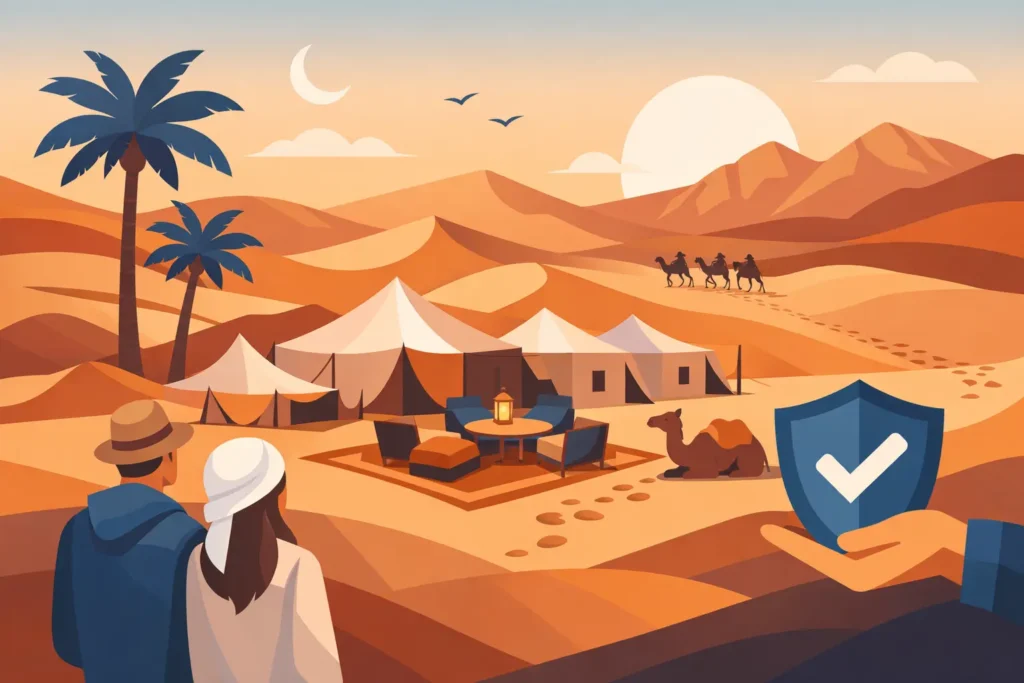
A Sahara night can look similar in photographs: warm lanterns, patterned rugs and dunes glowing at sunset. The reality varies greatly from one camp to another. Knowing how to choose desert camp accommodation means looking beyond the tent décor and choosing a stay that suits your route, comfort level, travel party and expectations.
For most visitors, the desert camp is the emotional high point of a Morocco holiday. It is where a long drive through the Atlas Mountains, valleys and kasbahs leads to silence, stars and the changing colours of the dunes. A well-chosen camp makes that arrival feel effortless. A poorly matched one can mean too much time in the vehicle, basic facilities you did not expect, or a camp that feels far busier than the peaceful Sahara experience you had imagined.
Start with the desert region, not the tent photos
Morocco has more than one way to experience the desert. The best choice depends on your available time and the kind of landscape you want to see.
Erg Chebbi, near Merzouga, is the best-known dune region and the most practical choice for many first-time travellers. Its tall, golden dunes are dramatic, accessible and work well within routes from Marrakech or Fes. Many private tours arrive in the afternoon, allowing time for a camel ride or 4×4 transfer before sunset, dinner and an overnight stay.
Erg Chigaga, reached from the M’Hamid area, is more remote and feels wilder. It usually requires additional driving and off-road travel, so it suits travellers with more time who value isolation over convenience. The dunes can feel less developed and more expansive, but the journey is longer and requires careful route planning.
Ask where the camp is actually located. Some properties are positioned among dunes, while others sit at the edge of the desert with views towards them. Neither option is automatically better. A dune camp offers stronger scenery and a greater feeling of escape, while an edge-of-desert camp may be easier to access and more suitable for guests with limited mobility, young children or a shorter itinerary.
Choose the right level of desert comfort
The words “standard camp” and “luxury camp” do not mean the same thing everywhere. Always ask for clear details about the tent, bathroom and services rather than relying on a label.
A standard desert camp may offer comfortable bedding, shared toilets and showers, a communal dining tent, and simple but satisfying Moroccan meals. This can be an excellent choice for travellers who want an authentic night in the desert and are happy with a more traditional set-up.
Luxury camps generally provide larger private tents, proper beds, en-suite bathrooms, hot water, towels and more considered furnishings. Some have private terraces or small seating areas facing the dunes. They are ideal for couples celebrating a special occasion, families wanting more privacy, or anyone who prefers hotel-style comfort after a day on the road.
However, luxury does not always mean better if the atmosphere matters most to you. A smaller, well-run standard camp deep in a quiet dune area may feel more memorable than a larger luxury property with many tents and frequent tour groups. Decide whether your priority is privacy, facilities, scenery or price, then choose accordingly.
Check the details that affect your night
Desert temperatures change quickly. Even after a hot afternoon, evenings can become cool, especially from November to March. Ask whether the camp provides warm blankets, heating where available, and a dining area protected from wind. In summer, ventilation, shade and the timing of activities matter more than heating.
Electricity is another practical point. Most established camps have solar power for lighting and charging devices, but power may be limited. If you need to charge camera batteries, use a medical device, or stay connected for work, confirm this before booking. Mobile signal and Wi-Fi can be weak or unavailable in the dunes, which is part of the appeal for many guests but worth planning for.
Consider how you will reach the camp
The journey to camp is part of the experience, not just a transfer. You may arrive by camel, 4×4, quad bike in selected areas, or a combination of vehicle and short walk.
Camel trekking is a classic option, particularly at sunset, but it is not right for everyone. A ride of around 30 to 60 minutes can be enjoyable and scenic, yet it may be uncomfortable for travellers with back, hip or mobility concerns. Children should be supervised closely, and anyone unsure should ask whether a 4×4 transfer can be arranged instead.
A 4×4 transfer is often more practical for families, older travellers and guests arriving with larger luggage. It also allows for a later departure from the desert gateway town and can reduce physical strain after a long touring day. Many travellers choose a short camel ride for the experience, with their bags transferred separately by vehicle.
Be clear about whether the quoted price includes the desert transfer, luggage handling, dinner, breakfast and the return journey the following morning. These small details prevent confusion and help you compare camps fairly.
Look for a camp size that matches your travel style
A desert camp can be intimate and quiet or lively and social. Neither is wrong, but you should know what you are booking.
Smaller camps often offer a more personal welcome, flexible meal times and a quieter evening around the fire. They are particularly appealing for couples, private groups and travellers who want to hear the desert rather than loud music from neighbouring tents.
Larger camps may have more facilities and a more energetic atmosphere, including drumming after dinner. They can suit travellers who enjoy meeting others, but a full camp may feel less private than the images suggest. If you are booking a private Morocco tour, ask whether your group will have a private tent, private dining option or a separate area at camp.
Also ask how close the tents are to each other. In the desert, privacy is not only about having an en-suite bathroom. It is about whether you can step outside at night, look towards the dunes and feel that the landscape still belongs to the moment.
Food, service and local knowledge matter
Dinner in a desert camp is often a highlight: soup, salads, tagine, couscous, fresh bread, fruit and mint tea are common. Yet dietary requirements need advance planning. Vegetarian, vegan, gluten-free and allergy-friendly meals can often be organised, but the camp must know before you arrive, especially in remote areas where supplies are limited.
Ask who operates the camp and who will host you on site. A local team with experience in the region can make a real difference, from adjusting the schedule around weather conditions to explaining desert traditions with respect. Good hosts do not simply serve dinner and point out the tents. They help you feel looked after while giving you space to enjoy the setting.
For international travellers, clear communication is equally valuable. Confirm whether your driver or guide speaks your preferred language, whether the camp team can assist if needed, and who to contact if plans change. Morocco Customised Tours arranges desert stays as part of private routes, helping guests match the camp, transfer style and timing to the rest of their journey.
Plan around the season and your route
The Sahara is rewarding throughout much of the year, but conditions shape the experience. Spring and autumn usually offer pleasant daytime temperatures and cooler evenings, making them popular seasons for desert tours. Winter brings crisp days and cold nights, while summer can be intensely hot, particularly in July and August.
In warmer months, choose an itinerary that reaches the dunes later in the day and avoids unnecessary midday activity. In winter, bring warm layers, socks and a hat for the evening, even if the forecast looks mild. Sandals are useful around camp, but closed shoes are better for walking on dunes and travelling between stops.
Do not choose a camp in isolation from the route. From Marrakech, reaching Merzouga normally involves a full day through the High Atlas and southern Morocco, with many travellers preferring a two- or three-day journey so the drive remains enjoyable. From Fes, the approach is often more direct but still takes most of a day. A camp may be beautiful, but the overall holiday works best when the arrival and departure days are realistic.
Questions worth asking before you confirm
Before booking, request a straightforward answer on the points that shape the experience:
- Is the camp in the dunes or at the desert edge?
- Does the tent have a private bathroom, hot water and electricity?
- Is the transfer by camel, 4×4 or both, and how long does it take?
- Are dinner, breakfast, activities and luggage transfers included?
- How many tents are at the camp, and can private arrangements be made?
- Can the camp cater for dietary needs and support your preferred language?
A reliable operator will answer these questions clearly, without vague promises or last-minute changes. The best camp is not necessarily the most expensive one. It is the one that fits your route and lets you enjoy the Sahara with confidence.
When you finally sit outside your tent beneath a clear desert sky, the practical decisions will fade into the background. What remains is the stillness, the dunes and the feeling that Morocco has welcomed you somewhere truly extraordinary.