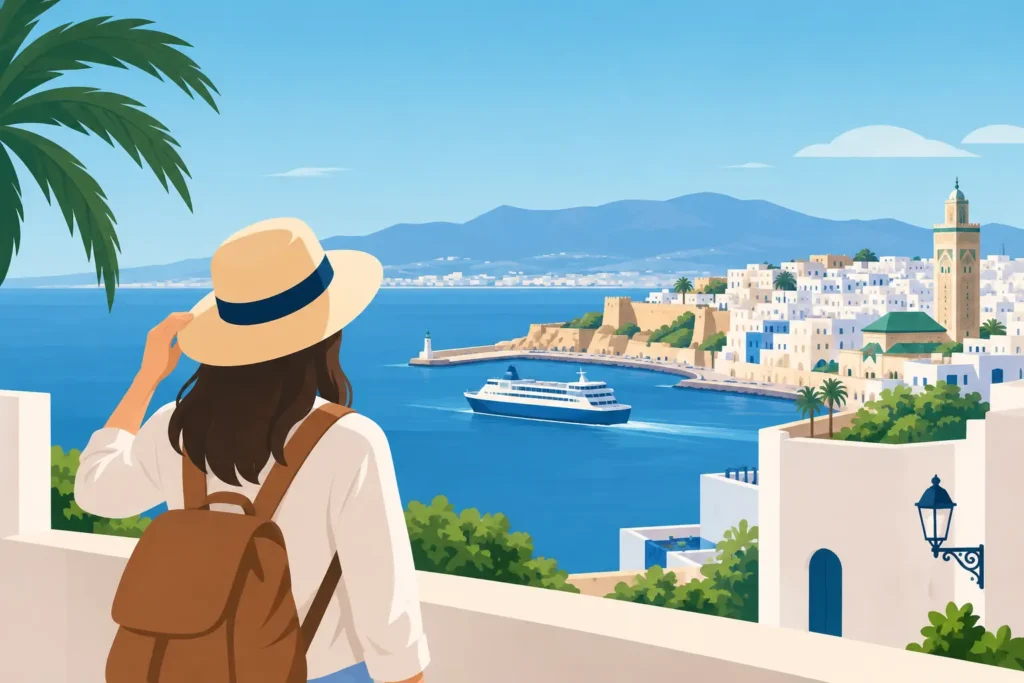
Tangier rewards travellers who plan with intention. The city is compact enough for a rewarding visit in one day, yet layered with places that are easy to miss when transport, timings and local customs are left to chance. To organise a Tangier day tour properly, start by deciding whether Tangier is your arrival point from Spain, a day within a wider Morocco holiday, or a private excursion from another northern city.
A well-paced day combines the whitewashed Kasbah, the old medina, Atlantic viewpoints and time for a relaxed Moroccan lunch. It should not feel like a race between photo stops. With a private driver and knowledgeable local guide, Tangier becomes an introduction to northern Morocco shaped around your interests, comfort and available time.
Start with the right Tangier itinerary
Most visitors arrive in Tangier in one of two ways. They either land at Tangier Ibn Battuta Airport or cross the Strait of Gibraltar by ferry from Tarifa to Tangier Ville. The ferry route is particularly convenient for travellers staying in southern Spain, but it needs careful timing. Arrive at the port early, allow for passport control on both sides, and avoid planning a tightly scheduled first hour in the city.
If you are staying in Tangier, a full-day private tour can usually begin between 9.00 and 9.30am. Day visitors arriving by ferry should meet their driver or guide outside the terminal after clearing formalities. Your guide can adapt the order of visits according to ferry arrival, traffic and the weather, which matters on the exposed coastal road.
For most guests, six to eight hours is the right length. This allows enough time to see Tangier beyond its central lanes without making lunch or the medina feel rushed. A shorter visit can still work, but choose fewer stops and keep expectations realistic.
How to organise a Tangier day tour around your interests
The best route depends on what you want from the day. First-time visitors often prefer Tangier’s classic highlights: Cap Spartel, the Caves of Hercules, the Kasbah and medina. Travellers interested in history may want longer in the old city, including the American Legation area and the Grand Socco. Families may prefer a gentler schedule with coastal scenery, a cave visit and an early lunch.
A practical private itinerary usually begins outside the city centre. Starting at Cap Spartel gives you clear views where the Atlantic Ocean meets the Mediterranean Sea, although the exact meeting line is more symbolic than visible. From there, continue to the Caves of Hercules, a famous natural site known for its sea-facing opening, often said to resemble the outline of Africa.
These sites are close together, but allow time for walking and photographs. The caves can be busy during school holidays and on days when ferries bring large visitor groups from Spain. A local driver knows when it is worth arriving early, and when to reverse the route to avoid the busiest period.
Return to the city for the historic centre. The Kasbah sits on higher ground above the port, with narrow streets, traditional doorways and views across the bay. It is a more peaceful area than the lower medina, so it is an excellent place to slow down and understand Tangier’s position between Africa and Europe.
From the Kasbah, walk downhill through the medina towards the Petit Socco and Grand Socco. This is where a licensed guide adds real value. Tangier’s old city is not enormous, but its stories are easily overlooked: diplomatic history, Jewish heritage, international writers, local crafts and the daily rhythm of neighbourhood life. You will also avoid spending your limited time trying to work out which direction leads back to the meeting point.
Choose lunch for the kind of day you want
Lunch is more than a break in the schedule. It is a chance to enjoy northern Moroccan flavours at a sensible pace. Fresh grilled fish is a natural choice in Tangier, while tagines, couscous and pastilla suit travellers looking for traditional dishes. If you have dietary requirements, share them before the tour begins so your guide can recommend an appropriate restaurant.
A quick lunch leaves room for an additional museum or time in the souks. A longer sit-down meal creates a more relaxed day, particularly for couples and families. Neither choice is wrong, but trying to fit a leisurely two-hour lunch, extensive shopping and every major sight into one day is where itineraries lose their balance.
Private transport or an independent visit?
It is possible to explore central Tangier independently, especially if you are staying near the port. Taxis are widely available, and the medina is best explored on foot. However, Cap Spartel and the Caves of Hercules are outside the centre, so independent visitors need to negotiate taxis, agree waiting times and manage the return journey.
A private vehicle is the easier option for a one-day visit. It keeps luggage secure if you are arriving from Spain, avoids parking concerns, and gives you a comfortable place to rest between the coast and the old city. For guests travelling with children, older relatives or limited mobility, this convenience can make the entire experience more enjoyable.
A driver and a guide serve different purposes. Your driver manages the road, drop-offs and timing. Your local guide brings the medina to life, helps with cultural context and adjusts the walking route to your pace. For a panoramic tour with little walking, a driver may be enough. For travellers who want genuine local insight, add a guide for the historic centre.
Leave room for Tangier’s practical details
Tangier is generally relaxed and welcoming, but a few small preparations make a difference. Wear comfortable shoes with grip for cobbled streets and uneven steps in the Kasbah. Bring a light layer even in warmer months, as the coast can be windy. During summer, begin early to avoid the strongest heat and the busiest midday streets.
Carry some Moroccan dirhams for small purchases, tips and cafés. Cards are accepted in many hotels and established restaurants, but cash remains useful in markets and smaller shops. If you want to buy rugs, ceramics, leather goods or spices, let your guide know whether you are browsing or genuinely shopping. A good guide will respect your preference and keep the tour focused on your holiday, not on unwanted stops.
Photography is welcome in many public areas, but always ask before photographing people, especially market traders and families. Morocco values hospitality, and a courteous approach goes a long way. Modest, comfortable clothing is suitable for Tangier; there is no need to dress formally, but beachwear belongs at the beach rather than in the medina.
Add Tangier to a longer Morocco holiday
Tangier works particularly well as the first stop on a northern Morocco route. After a day in the city, many travellers continue to Chefchaouen, the blue mountain town around two to three hours away depending on traffic and stops. Others travel south to Fes, combining the Rif Mountains, Roman Volubilis and Meknes over several days.
If you only have one night in Tangier, do not try to force a late arrival, a full tour and a long onward transfer into the same day. An overnight stay gives you the chance to see the city after dark, enjoy dinner by the port or in the old town, and depart rested the following morning. It is often a better value choice than sacrificing the experience to save a few hours.
For guests seeking a tailored northern itinerary, Morocco Customized Tours can arrange private transport, multilingual guides and a route that continues naturally from Tangier to Chefchaouen, Fes or the Sahara. Local planning is especially useful when ferry schedules, hotel check-ins and onward journeys need to work together.
Tangier is not a city to tick off between crossings. Give it a full day, choose the experiences that matter most to you, and let enough unplanned time remain for mint tea, sea air and the unexpected corners of the medina.