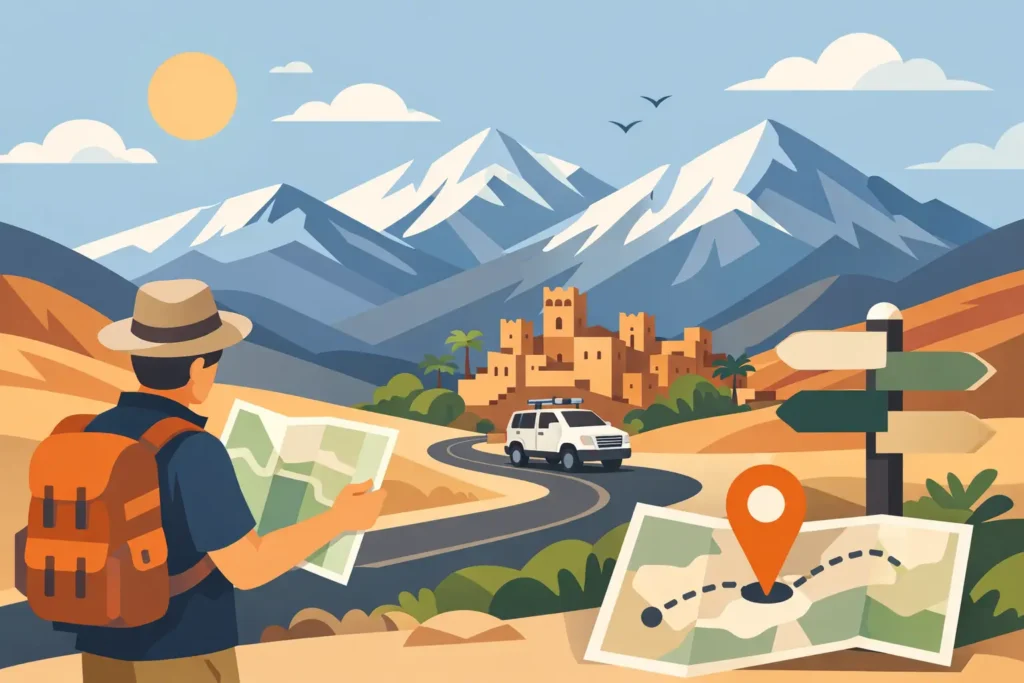
The road out of Marrakech changes quickly. Ochre city walls give way to olive groves, then red foothills, Berber villages and high passes where the air feels noticeably cooler. An Atlas Mountains tour guide turns that dramatic change of scenery into a well-paced day or multi-day journey, with the right route, reliable transport and meaningful local encounters rather than a rushed drive through the mountains.
For first-time visitors, the Atlas can look straightforward on a map. In reality, distances take longer than expected, weather can alter plans, and the most rewarding villages and viewpoints are often beyond the main road. A private guide and driver help you travel with confidence while keeping the experience flexible around your interests, fitness level and accommodation plans.
Choosing the Right Atlas Mountains Tour Guide
The best mountain itinerary depends on what you want Morocco to feel like. Some travellers want a relaxed escape from Marrakech with waterfalls, lunch beside a river and a short village walk. Others want to cross the High Atlas on the way to Ait Ben Haddou, Ouarzazate and the Sahara Desert. Both are excellent, but they are very different days.
A local guide should do more than point out peaks from the vehicle. They should explain village life, help you understand local customs, recommend sensible walking routes and adjust the day when weather, traffic or family needs require it. For private groups, this also means you are not tied to a fixed coach timetable or obliged to spend every stop at a souvenir shop.
At Morocco Customized Tours, private Atlas journeys can be planned around your arrival city, preferred pace and wider Morocco itinerary. English, French and Spanish-speaking support makes the practical details easier, whether you are travelling as a couple, family or small group.
A day trip from Marrakech: Ourika Valley or Imlil
For a day in the mountains, the Ourika Valley and Imlil are the two most popular choices from Marrakech. Ourika is generally the easier option for travellers seeking a scenic, lower-altitude outing. The valley follows the river through villages and terraced fields, with cafés and walking opportunities along the way. It is a good fit for families, limited mobility needs and visitors who prefer a shorter, gentler day.
Imlil lies higher in the High Atlas, near the trailhead area for Mount Toubkal. The scenery is more alpine, the village setting feels more remote, and the walking is usually more central to the experience. A local mountain guide can lead a suitable route through nearby hamlets and explain how communities farm and live on these steep slopes. Choose Imlil if you want fresh air, mountain views and a more active day, but be honest about your comfort with uneven paths and changes in altitude.
Crossing the High Atlas to Ait Ben Haddou
If your holiday includes the Sahara, one of Morocco’s great road journeys crosses the High Atlas from Marrakech towards Ait Ben Haddou and Ouarzazate. The route climbs through the Tizi n’Tichka pass, a spectacular section of road with broad views over ridges, valleys and changing rock formations.
This is not a short excursion. It works best as part of a two-day or longer route, particularly when continuing to the Dades Valley, Todra Gorge and Merzouga. A private vehicle gives you time for photo stops, a proper visit to the historic ksar of Ait Ben Haddou and a more comfortable rhythm before the long desert drive. In winter, conditions on the pass can be cold and occasionally affected by snow, so an experienced operator will monitor the road and recommend alternatives where necessary.
From Fes through the Middle Atlas
Travellers beginning in Fes can experience a different side of the mountains. The Middle Atlas route towards Ifrane, Azrou and Midelt brings cedar forests, cooler temperatures and landscapes that contrast sharply with the medinas of Fes. It is often included on a route to Merzouga, and it suits travellers who want to break up a longer drive with nature, small towns and panoramic stops.
Do not expect the same high, rugged scenery as the Marrakech High Atlas crossing. This region has its own appeal: forested slopes, wide plateaus and a quieter road into the desert. Your route should be chosen for the wider trip, not simply because one mountain area is more famous than another.
What a Private Atlas Mountains Tour Should Include
A well-organised private tour normally includes a dedicated driver, air-conditioned transport, collection from your accommodation and a planned route based on the season. For walking-focused days, it is worth confirming whether a licensed local mountain guide is included, as a driver and a hiking guide serve different roles.
Ask in advance about the pace of the day, estimated driving time, meal arrangements and the amount of walking involved. This is especially useful for families with younger children, guests travelling with older relatives or anyone who prefers a gentle walk over a steep climb. Clear planning prevents a beautiful mountain day from becoming unexpectedly tiring.
For an overnight route, check the standard of accommodation as well as its location. A traditional guesthouse in a valley village offers more local atmosphere, while a higher-end lodge may provide greater comfort, heating and mountain views. Neither is automatically better. The right choice depends on whether your priority is cultural immersion, privacy, facilities or a combination of all three.
When to Visit the Atlas Mountains
Spring and autumn are often the most comfortable seasons for touring. From March to May, valleys are green, rivers can be lively and daytime temperatures are usually pleasant. September to November brings clear light, warm days and cooler evenings, making it especially good for road trips and walks.
Summer is possible, particularly in higher areas such as Imlil, where the mountains offer welcome relief from Marrakech heat. Start early, carry water and avoid assuming every path will be shaded. Winter brings crisp views and fewer visitors, but temperatures can fall sharply after sunset. Higher routes may have snow, and road conditions deserve closer attention.
Ramadan can also affect the rhythm of village life and restaurant service, although Morocco remains welcoming to visitors. A thoughtful guide will help you travel respectfully and set realistic expectations for timing during the day.
What to Wear and Bring
Mountain weather is changeable, even when Marrakech is hot. Comfortable closed shoes with a good grip are the sensible choice for village paths and uneven ground. Bring a light layer for the morning and evening, sun protection, water and a small amount of cash for personal purchases or tips.
Avoid treating mountain villages as an outdoor theme park. Dress respectfully, ask before photographing people and follow your guide’s advice around homes, farms and places of worship. These small decisions make a real difference to the welcome you receive.
Make the Route Personal
The most memorable Atlas experiences rarely come from adding every possible stop. They come from choosing the right few: tea with a local family, a walk through walnut groves, a viewpoint above a valley, or a relaxed lunch after a morning on the road. Tell your guide whether you care most about scenery, food, photography, walking or cultural conversation, and let that shape the day.
Give yourself enough time to stop when the landscape asks you to. In the Atlas Mountains, the unscheduled view from a quiet roadside pull-in can become the moment you remember long after your Morocco holiday ends.