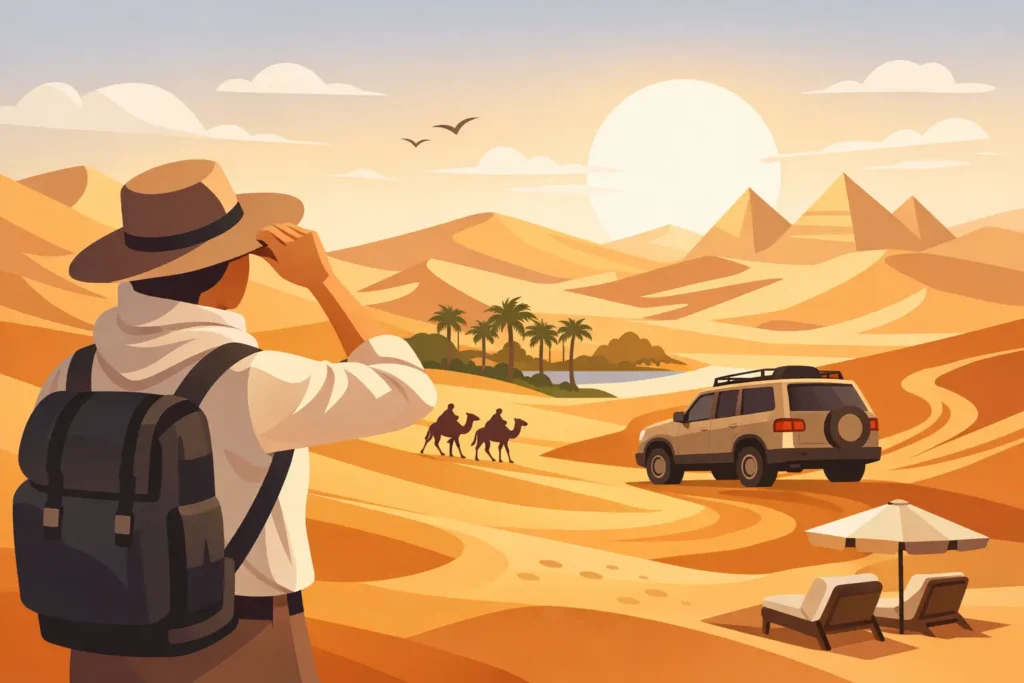
A Sahara trip should feel memorable for the right reasons – sunrise over the dunes, a quiet evening under the stars, and the sense that Morocco suddenly opens up in a completely different way. If you are wondering how to visit Sahara comfortably, the answer is not simply booking any desert excursion. Comfort in the Sahara depends on route planning, driving times, camp quality, season, and the kind of support you have on the ground.
For many travellers, the desert is the highlight of Morocco, but it is also the part of the journey where poor planning shows quickest. A budget camp with basic facilities, a rushed overnight drive, or the wrong travel month can turn a dream stop into a tiring one. With the right itinerary and a private, well-paced approach, the Sahara can be one of the most comfortable and rewarding parts of your holiday.
What comfortable Sahara travel really means
Comfort means different things to different travellers. For some, it means a proper bed, a private bathroom, and a heated tent in winter. For others, it means reducing long driving days, having a reliable driver, and knowing each stage of the route has been arranged in advance.
In Morocco, the most popular gateway to the dunes is Merzouga, on the edge of Erg Chebbi. This is the classic Sahara experience most visitors are looking for. It offers camel rides, 4×4 access, desert camps, and a wide range of accommodation levels from simple to very refined. If your priority is comfort, Merzouga usually gives you the best balance of scenery, access, and camp quality.
How to visit Sahara comfortably from Morocco’s main cities
Your starting point matters more than many travellers expect. The Sahara is not a short hop from Marrakech or Fes, and trying to force it into too little time is where discomfort begins.
From Marrakech, a classic route to Merzouga usually takes at least 3 days if you want the journey to feel reasonable. This allows time to cross the High Atlas Mountains, visit Ait Ben Haddou or Ouarzazate, continue through the Dades or Todra area, and then reach the desert without spending the entire trip in the car. A 4-day option is even better if you want more breathing room.
From Fes, the route is generally more direct and can feel easier for travellers who want to reach the desert with fewer major sightseeing stops. A 2-day journey can work, but 3 days is more comfortable and gives you time to enjoy the Ziz Valley and the changing landscapes rather than racing through them.
From Casablanca or Tangier, the best approach is to build the Sahara into a longer private tour rather than treating it as a stand-alone dash. These are excellent starting points for broader itineraries, but they need proper pacing if comfort is the goal.
Choose private transport over shared travel
If you are serious about how to visit Sahara comfortably, private transport makes the biggest difference. Shared group tours can be lower in price, but they usually mean fixed stops, less flexibility, and longer days shaped around the group rather than your pace.
A private driver-guide allows you to leave at sensible times, stop when you need to, and adapt the journey if you are travelling with children, older relatives, or simply want a more relaxed rhythm. It also means your luggage handling, hotel check-ins, and desert camp arrival are much smoother. For couples and families, this often becomes the difference between a tiring transfer and a proper travel experience.
Comfort is also about confidence. When you are travelling long distances through mountain roads, valleys, and desert regions, having a local driver who knows the route, road conditions, and timing is not a luxury. It is practical support.
Pick the right desert camp
Not all Sahara camps offer the same level of comfort. This is one of the most important decisions in your itinerary, and it is where many travellers either get the experience exactly right or feel disappointed.
A comfortable camp should offer en suite facilities or at least a genuinely well-kept private bathroom arrangement, good bedding, proper evening meals, and staff who know how to host international guests. In colder months, heating matters. In warmer months, airflow and tent placement matter. Electricity availability, charging points, and how far the camp is from the main access point can also affect the overall experience.
There is also a simple trade-off to understand. Camps deep in the dunes can feel more remote and dramatic, but sometimes that remoteness comes with fewer practical comforts. Camps closer to the edge of the dunes may offer a slightly easier arrival while still giving you the desert atmosphere most travellers want. The best choice depends on whether your priority is pure isolation or a more polished stay.
Camel ride or 4×4 transfer?
Camel trekking is iconic, but it is not the most comfortable option for everyone. If you have back issues, limited mobility, young children, or simply prefer an easier arrival, a 4×4 transfer into camp is often the better choice.
Many travellers choose a short camel ride at sunset for the experience, then use a vehicle for part or all of the transfer. This gives you the photographs and atmosphere without making the full approach physically demanding. There is no wrong answer here. The key is to match the experience to your comfort level, not to what looks traditional in a brochure.
Travel in the right season
The Sahara is beautiful year-round, but not every season feels equally comfortable. Spring and autumn are generally the easiest times to travel. Days are pleasant, evenings are cooler without being severe, and road travel tends to feel more manageable.
Summer can be very hot, especially from late June through August. Some travellers still enjoy the desert at this time, particularly with higher-end accommodation and careful scheduling, but it requires realistic expectations. Midday heat can be intense, and activities need to be timed accordingly.
Winter often surprises visitors. The desert is not always hot. Days may be mild and bright, but nights can be very cold, especially in camps. A good camp setup, warm layers, and the right bedding are essential. With proper preparation, winter can be a lovely time to visit because the light is clear and the dunes are especially striking.
Pack for comfort, not just photographs
Packing well is one of the simplest ways to improve your Sahara experience. Loose clothing, comfortable layers, sunglasses, closed shoes for the journey, and a warm outer layer for evening are more useful than overly styled outfits that look good for ten minutes and become awkward afterwards.
A small overnight bag is also practical if your main suitcase stays in the vehicle or at a hotel before camp entry. Wet wipes, lip balm, sun cream, and a scarf for wind or sand can make a noticeable difference. If you are travelling in winter, do not underestimate how much warmer you will feel with a hat, thermal layer, and thick socks at night.
Do not rush the road to the desert
One of the biggest mistakes travellers make is focusing only on the dunes and ignoring the route. The Sahara experience starts well before you reach camp. Mountain passes, kasbahs, oasis towns, palm valleys, and changing landscapes are part of what makes the journey special.
When the itinerary is too tight, all of this becomes a blur. When it is well paced, the road to the desert becomes part of the holiday rather than a test of endurance. This is why a tailored private journey works so well. It allows comfort to come from timing, not just accommodation level.
At Morocco Customised Tours, this is exactly where local planning matters. The right overnight stops, realistic driving distances, and carefully chosen desert properties turn a long-distance route into a smooth and enjoyable experience.
Who benefits most from a comfort-first Sahara trip?
A comfort-first approach is especially worthwhile for couples celebrating a special trip, families travelling with children, and first-time visitors who want to enjoy Morocco without managing every transfer themselves. It is also ideal for travellers who appreciate cultural experiences but do not want the uncertainty of public transport, last-minute bookings, or basic overnight conditions.
That said, comfort does not have to mean excessive luxury. Sometimes it simply means choosing three well-planned days instead of two rushed ones, or selecting a dependable mid-range camp with private facilities rather than the cheapest available option. The best Sahara journeys are usually the ones that balance authenticity with practical ease.
The desert does not need to be harsh to feel real. With the right route, the right season, and the right local support, it can feel calm, welcoming, and surprisingly refined. If the Sahara is on your Morocco wish list, give yourself enough time to do it properly – you will enjoy the silence, the scenery, and every mile of the journey far more.