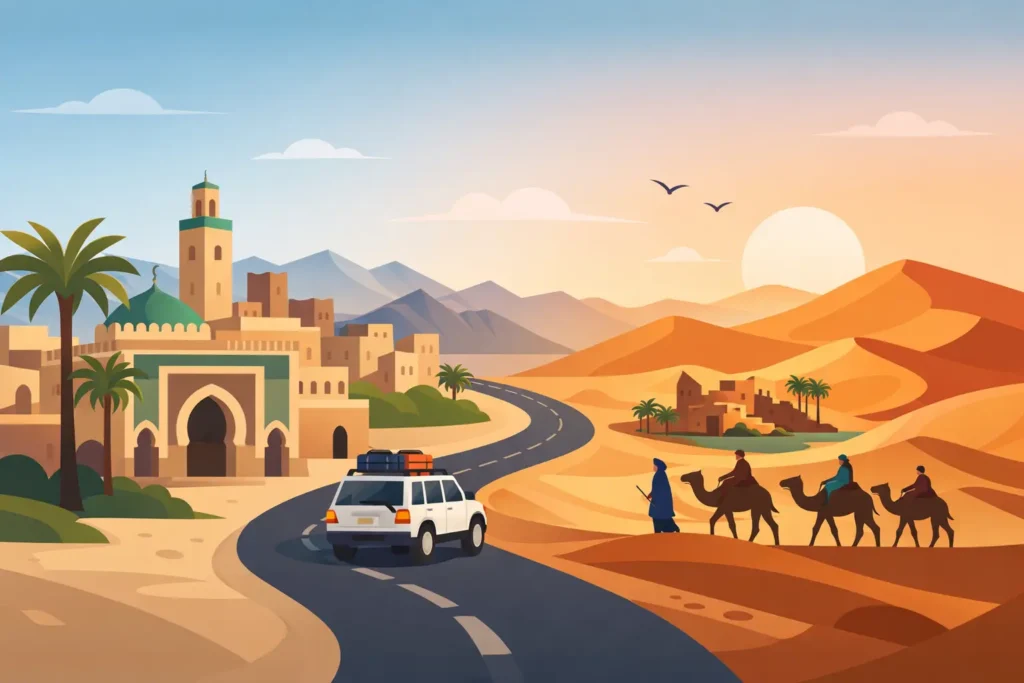
A Fes to Merzouga tour is one of the most rewarding ways to experience Morocco beyond the cities. In a matter of days, the landscape changes from the old medina of Fes to cedar forests, mountain passes, desert plains and finally the golden dunes of Erg Chebbi. For many travellers, this route delivers the Morocco they came for – culture, scenery, comfort and the Sahara in one well-paced journey.
The route looks simple on a map, but the difference between an average trip and a memorable one usually comes down to pacing, vehicle quality, local knowledge and where you stop along the way. If you are planning this journey for the first time, it helps to know what a well-organised tour should include and where flexibility matters.
Why choose a Fes to Merzouga tour?
This route is ideal for travellers who want to leave Fes and reach the Sahara without dealing with bus changes, long waits or unclear timetables. It suits couples, families, small private groups and anyone who wants the desert experience with proper support from start to finish.
A private tour is especially useful here because the drive is long and the region is spread out. Having a dedicated driver means you can stop when the scenery changes, pause for lunch in the right place and adjust the day if needed. That matters more than many visitors expect, especially once you reach the more remote sections of the journey.
It is also a strong option if you want to continue after Merzouga towards Dades Valley, Ouarzazate or Marrakech. Many travellers start by searching for a simple desert trip, then realise the route can become part of a wider Morocco itinerary.
The usual route from Fes to Merzouga
Most tours begin with an early departure from Fes. The first major section passes through Ifrane, often called the Switzerland of Morocco because of its tidy streets, alpine-style buildings and cooler climate. It feels very different from Fes and gives you an immediate sense of how varied the country is.
From there, the road continues towards Azrou and the cedar forests of the Middle Atlas. This is one of the common stop areas on the route. Depending on timing, you may have the chance to stretch your legs and see the forest before continuing south.
The journey then moves through Midelt, which is a practical lunch stop on many itineraries, before heading across more dramatic and increasingly arid terrain. Ziz Valley is often one of the visual highlights of the drive, with palm groves and long views that signal your approach to the desert regions.
By late afternoon or early evening, you reach Merzouga. This is the edge of Erg Chebbi, the famous dune field many travellers picture when they imagine the Moroccan Sahara. From here, the experience shifts from road journey to desert stay.
How long should the trip be?
A Fes to Merzouga tour can be done in two days, but whether that is the right choice depends on your travel style. Two days works for visitors with limited time who mainly want to reach the dunes, ride camels and sleep in a camp before returning or moving on. It is efficient, but it is a fast schedule with several hours on the road.
Three days is usually the better balance. It allows for a more comfortable drive, better-timed stops and a less rushed arrival in the desert. You get more time to enjoy the camp, sunset, sunrise and the atmosphere of the region rather than simply ticking off the route.
If your schedule allows, adding an extra day in Merzouga is often worthwhile. This gives space for a 4×4 desert excursion, a visit to nomad areas, time in Khamlia for Gnawa music or simply a slower morning at the camp. The desert rewards travellers who do not hurry through it.
What the desert experience usually includes
Once you arrive in Merzouga, most tours continue with a camel trek or 4×4 transfer into the dunes. Camel rides remain the classic choice and many visitors enjoy them, particularly near sunset when the light changes across the sand. That said, they are not essential for everyone. Some travellers prefer a direct 4×4 arrival at camp for comfort, especially families with young children or guests who have back concerns.
Camp quality varies more than many people expect. Standard camps can be enjoyable and atmospheric, with private or shared facilities depending on the setup. Luxury camps offer more space, better bedding, en-suite bathrooms and a stronger focus on comfort. If the desert stay is the centrepiece of your holiday, the camp category is worth careful attention.
Evenings usually include dinner, music and time under the stars. In winter, nights can be genuinely cold, while spring and autumn are generally the most balanced seasons. Summer brings intense daytime heat, so schedules need to be handled more carefully.
What makes one tour better than another?
Not every desert itinerary is built in the same way. Some tours look attractive because of a low headline price, but the details can tell a different story. A long-distance route like this depends heavily on execution.
The first point is transport. A comfortable, well-maintained vehicle with air conditioning matters on this route. So does having a professional driver who knows the road, understands pacing and can communicate clearly in English. If you are travelling as a couple or family, private transport often changes the entire feel of the journey.
The second point is the stop selection. Good tours do not just drive from A to B. They choose meaningful pauses – scenic points, reliable restaurants, local viewpoints and useful breaks that make the day easier. This is where local operators have a real advantage.
The third point is flexibility. Some travellers want many photo stops. Others prefer a smoother direct journey with fewer interruptions. A well-designed private trip should adapt to that. Morocco Customised Tours, for example, focuses on this kind of tailored planning, which is especially valuable on desert routes where comfort and timing shape the experience.
Pricing factors travellers should understand
Prices for this route depend on more than distance. The biggest factors are whether the tour is private or shared, how many days you choose, the vehicle category, hotel level and desert camp standard.
A lower-cost shared tour may suit budget-conscious travellers, but it usually comes with fixed departure times, less personal space and less flexibility during stops. Private tours cost more, yet they offer far better control over pace, privacy and comfort. For many international visitors, especially those travelling a long way to reach Morocco, that extra value is easy to justify.
Season also affects price. Peak dates, school holidays and premium camp demand can raise costs. If you want a luxury desert camp or a high-end vehicle, it is best to book early rather than waiting for last-minute availability.
Best time to take a Fes to Merzouga tour
Spring and autumn are generally the strongest seasons for this route. Days are pleasant, nights are manageable and the desert experience is more comfortable overall. These months are especially popular with couples and first-time visitors.
Winter can be excellent if you enjoy crisp desert mornings and clearer skies, but you should prepare for cold evenings and very cool overnight temperatures. Summer is possible, though best suited to travellers who understand the heat and are comfortable with early starts, shaded breaks and lighter daytime activity.
If timing is flexible, avoid choosing purely by calendar. Think about what kind of desert experience you want. Some guests love the stillness of winter, while others prefer the softer temperatures of April, May, September and October.
Practical tips before you go
Pack for contrast rather than just desert heat. Mornings and evenings can feel very different from midday, so layers are useful all year. Comfortable shoes, sunglasses, sun cream and a scarf for dust or wind are sensible additions.
For the drive, keep water, tissues and any personal medication close by. Mobile signal can weaken in remote areas, so it is wise to download anything important in advance. If you are prone to motion sickness, the changing roads through the Middle Atlas may be worth planning for.
It also helps to be realistic about distances. This is not a short transfer with a camel ride at the end. It is a scenic overland journey across several regions of Morocco. Travellers who approach it that way usually enjoy it much more.
Is this tour right for you?
If you want to see the Sahara without navigating the logistics yourself, this route is one of the smartest choices in Morocco. It combines major scenery, cultural variety and a clear sense of progression from city to desert. It also works well as part of a longer itinerary, whether you continue to Marrakech or loop back towards Fes.
The best version of this trip is not simply the cheapest or the fastest. It is the one that matches your pace, comfort level and interests. When the route is well planned, the road to Merzouga becomes part of the experience, not just the distance before it.
If the desert is on your list, give yourself enough time to enjoy the journey there. That is often where Morocco begins to feel most unforgettable.