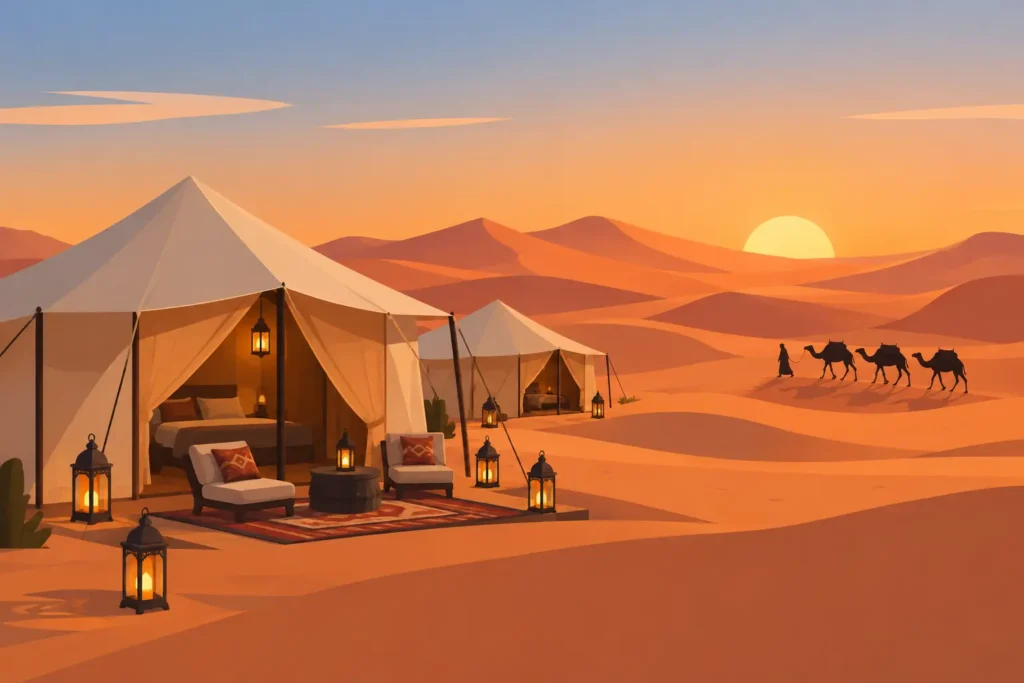
The best desert camps near Merzouga are not simply the ones with the most polished photographs. A memorable Sahara night depends on where the camp sits among the dunes, how reliably it is run, the comfort level of the tent, and whether the journey there suits the pace of your holiday. In Erg Chebbi, the vast golden dune field beside Merzouga, small details make the difference between a rushed excursion and a genuinely special desert experience.
For many travellers, a desert camp is the highlight of a Morocco itinerary. It is the moment when busy medinas, mountain roads and city sightseeing give way to silence, stars and the changing colours of the sand. Choosing well means matching the camp to your travel style, not only selecting the highest category advertised online.
What makes the best desert camps near Merzouga?
Merzouga is the main gateway to Erg Chebbi, but desert camps are spread across the dunes and the sandy edges surrounding the village. Some sit close enough for a short 4×4 transfer, while others are positioned deeper in the erg, where the sense of isolation is stronger. Neither option is automatically better.
A camp nearer the edge of the dunes is often more convenient for families, guests with limited mobility, or travellers arriving late after a long drive from Fes, Marrakech or Ouarzazate. Deeper camps can feel more remote and dramatic, but reaching them may involve a longer 4×4 journey or camel ride. Wind, heat and luggage are also worth considering, especially when travelling with young children.
The strongest camps usually get four essentials right: comfortable sleeping arrangements, private and clean bathroom facilities, sensible meal service, and experienced staff who manage transfers and desert activities calmly. A luxury label alone does not guarantee these standards. Ask what is included, where the camp is located, and whether the tent has an en-suite bathroom before confirming your stay.
Private tents matter more than a large camp
For couples and private groups, a smaller camp with spaced-out tents often feels far more exclusive than a large luxury camp with many guests. You may still enjoy music around the fire after dinner, but the evening should not feel like a crowded hotel entertainment programme transported to the dunes.
A private tent with proper beds, quality linen, electric lighting and an en-suite shower offers welcome comfort after a full day on the road. In winter, heating arrangements are particularly important. In summer, ventilation and the time of your activities matter more than elaborate decoration.
Food and service shape the evening
Dinner in the desert should be generous, freshly prepared and suited to dietary requirements that have been confirmed in advance. Most good camps serve Moroccan dishes such as soup, salads, tagine, grilled meat or vegetables, followed by fruit or a simple dessert. The setting is part of the experience, but hospitality is what guests remember.
A well-managed camp team knows when to offer guidance and when to give guests space. They can arrange a short walk on the dunes at sunset, explain local customs, help with luggage, and make sure you know the plan for the next morning. This quiet organisation is especially valuable when weather conditions change or families need extra support.
Choose the right camp style for your holiday
There is no single best option for every traveller. The right choice depends on how you want the Sahara to feel and how much comfort you expect after travelling across Morocco.
A standard desert camp is a good fit for travellers who want the essential experience at a more accessible price. Expect comfortable but simpler tents, shared or basic private facilities depending on the camp, dinner, breakfast, and a short desert transfer. This can be an excellent choice for a one-night stay when the wider itinerary includes Marrakech, the High Atlas, Ait Ben Haddou, the Dades Valley and Fes.
A luxury camp is better suited to honeymooners, anniversary trips, premium private tours and travellers who do not want to compromise on their overnight comfort. These camps may offer larger tents, en-suite bathrooms, proper beds, refined dining, lounge areas and more attentive service. The trade-off is cost, and some luxury camps are less remote than travellers expect. Ask whether the camp is actually among the dunes or on the desert boundary.
Boutique camps appeal to visitors who value atmosphere and a smaller number of tents. They are often ideal for couples and small groups seeking quiet, personal service rather than a large-scale operation. Availability can be limited in spring and autumn, so early planning is wise.
Family-friendly camps should prioritise safe transfers, flexible meal times and tents that can accommodate parents and children comfortably. A sunset camel ride may sound essential, but it is not always suitable for every child. A 4×4 transfer and a guided dune walk can be just as enjoyable, with much less pressure.
Questions to ask before booking a Merzouga desert camp
Before you book, request clear answers rather than relying on general descriptions. A reliable operator will explain the exact arrangements without hesitation.
- Is the tent private, and does it have its own toilet and shower?
- How long is the 4×4 or camel transfer from Merzouga?
- Is dinner, breakfast, luggage transport and bottled water included?
- What happens if strong wind or rain affects the planned activities?
- Can the camp cater for vegetarian, vegan, gluten-free or other dietary needs?
- Will there be other groups in the camp on the same night?
It is also useful to ask about electricity, charging points and mobile signal. Part of a desert stay is stepping away from daily distractions, but guests should not be surprised by limited connectivity. Most quality camps provide lighting and places to charge mobile phones, although signal can be inconsistent among the dunes.
Camel trek or 4×4 transfer?
This is one of the most common decisions when visiting Merzouga. A camel ride creates the classic Sahara arrival and can be beautiful near sunrise or sunset. However, it is not compulsory. Some travellers find camel riding uncomfortable, particularly after several hours of road travel, while others have mobility concerns or simply prefer to reach camp quickly.
A 4×4 transfer is practical, comfortable and often the best choice for families, older travellers and anyone carrying more luggage. It also allows your driver to select a route suited to the conditions. Many private itineraries combine both experiences: arrive by 4×4, take a shorter camel ride at sunset, then return by 4×4 the following morning.
Ethical animal care should always be considered. Choose arrangements where camels are handled responsibly, rides are not excessively long, and guests are never pressured into participating.
When to stay in the Sahara
October to April is generally the most comfortable period for a Merzouga desert camp. Days are pleasant for exploring and evenings can be cold, especially from December to February. Bring warm layers, closed shoes and a scarf for windblown sand, even if the daytime forecast looks mild.
Spring brings warmer temperatures and occasional wind, while summer can be intensely hot. A summer desert stay is still possible, but it needs careful planning. Arrive later in the day, limit strenuous activities, choose a camp with good ventilation, and keep expectations realistic about spending long periods outside. The desert is beautiful in every season, but comfort depends on adapting the schedule.
One night is enough for many itineraries, particularly when travelling from Fes to Marrakech or the other way round. Two nights are worthwhile if you want a slower experience with a desert walk, village visit, quad biking or time to watch both sunset and sunrise without rushing onward.
Build the camp stay into a well-paced route
Merzouga is not a quick detour from Morocco’s major cities. From Marrakech, the route normally passes through the High Atlas and southern valleys over several days. From Fes, it is a full travel day through the Middle Atlas and Ziz Valley. Trying to reach the dunes, ride a camel, watch sunset and depart again immediately can turn a once-in-a-lifetime stop into a tiring one.
A private driver-guide and planned overnight stops make a substantial difference. Morocco Customized Tours can tailor a route around your arrival city, preferred camp level, pace and interests, with local guidance throughout the journey. This is particularly useful for travellers who want to combine the desert with imperial cities, kasbahs, mountain scenery and time in smaller communities.
The right desert camp gives you more than a place to sleep. Leave enough time to remove your shoes, climb a quiet dune before dinner, and look up after the fire has gone out. That unhurried moment is often the Sahara experience people carry home with them.